Delray Beach Dog Trainer

How Petco Training Compares to a Certified Behaviorist: When to Stay and When to Upgrade

Picture this: you sign your dog up for a six-week group obedience class at your local Petco store. You go every Saturday. You do the homework. You buy the treats. Week six arrives, your dog gets a little graduation bandana, and you drive home thinking something has changed. Then you open the front door, and your dog body-slams the neighbor and bolts down the street exactly the way he always has. The certificate is real. The problem, unfortunately, is also still very real.

This scenario plays out constantly, and it's not entirely Petco's fault. Their training program fills a genuine need. The price point is accessible, the locations are convenient, and for certain dogs the format works well. The problem is that too many owners enroll in the wrong program for their dog's actual situation, cycle through courses without results, and assume the training failed when the real issue is a mismatch between what the dog needs and what the format is built to deliver.

At Canine Intuition, with more than 20 years of experience working with dogs across South Florida, the most common thing new clients say is some version of the same sentence: "I wish I had come here first instead of going through multiple rounds of group classes." This article gives you an honest breakdown of what Petco training delivers, where it ends, and how to tell which approach your dog actually needs.

What Petco dog training actually includes

How the classes are structured

Petco offers tiered group classes covering Puppy, Beginner/Fundamentals, and Advanced Obedience levels, typically running as six-week sessions held at local Petco store locations. Classes meet once a week for roughly an hour, with handlers practicing skills at home between sessions. The group format keeps class sizes small, with some locations capping enrollment at four dog-and-owner pairs, but one trainer is still managing multiple teams simultaneously. That structure limits the individualized feedback any single dog receives during a session.

What the curriculum focuses on

The core skills covered are sit, stay, down, come, leave it, loose-leash walking, and basic recall. The emphasis is on teaching handlers to cue behaviors using reward-based methods, not on diagnosing or modifying deeper behavioral patterns. Puppy-level classes also address basics like potty training, chewing, and teething. Dogs leave with foundational obedience skills, but reactivity management, fear desensitization, and drive-based work are not part of the curriculum at any level.

Trainer qualifications at Petco

Petco trainers complete the company's internal Dog Training Instructor Program, a six-week apprentice-based certification that qualifies them as Petco Certified Dog Trainers. It's a structured program with clear standards. However, there is no requirement to hold third-party credentials like CPDT-KA or IAABC certification, and the program is designed to prepare trainers for the group obedience format, not for clinical behavior modification. When you compare that background to a trainer with more than 20 years of clinical behavioral experience, you're looking at two fundamentally different skill sets built for two different types of problems.

Where Petco group classes genuinely work

New puppies and early socialization

For puppies under five months, group classes are often the right starting point. Exposure to other dogs, unfamiliar people, and new environments during the critical socialization window is exactly what these classes are built for. The group setting is an asset here, not a liability. Basic manners installed early through consistent reward-based handling prevent the larger behavioral problems that send owners to a specialist later, so the return on investment for a healthy, social puppy is real.

Dogs with mild obedience issues

A dog that pulls on leash, jumps on guests, or ignores "sit" in a distracted environment is a strong candidate for the Fundamentals or Advanced track. These are skill gaps, not behavioral disorders. A structured six-week class with consistent practice at home can close them when the handler is committed and the dog has no underlying anxiety or reactivity driving the behavior. At roughly $149 for a full course, the cost-to-result ratio works well for this type of case.

Where Petco training hits its limits

Dogs with aggression or reactivity toward other dogs or people

A group class environment is one of the worst settings for a dog with leash reactivity or dog-directed aggression. Proximity to unknown dogs, tight indoor spaces, and handler stress can actively reinforce the behavior rather than reduce it. Petco's own policy states that pets showing aggression during a session should be removed, which is the right safety call, but it also confirms the format was never designed to rehabilitate these dogs in the first place. Trainers in this setting are generally not equipped to run systematic desensitization and counter-conditioning protocols for dogs that go over threshold in the first five minutes of class.

Severe separation anxiety and fear-based behaviors

Separation anxiety, extreme noise phobia, and fear-based shutdown require systematic behavior modification conducted across weeks of structured exposure work with precise environmental control. A once-a-week group class doesn't provide the repetition density or the neutral learning environment that protocol requires. Worse, placing a fear-reactive dog in a room full of strangers and other animals can strengthen the fear response rather than reduce it. These cases also frequently need coordination with a veterinary behaviorist for medication support, which falls entirely outside the scope of what a Petco class can address.

Service animal and working dog requirements

Service dog training is one of the most technically demanding and legally significant areas in the field. Task training for diabetic alert, seizure response, mobility support, or PTSD requires a trainer with direct, documented experience in these disciplines. Standard group classes at Petco are not designed for service animal task training. Enrolling a future service dog in a standard group class risks building habits that will need to be untrained later, which adds both time and cost to an already complex process.

Red flags that tell you it's time to move to specialized help

Behaviors that get worse in a group setting

If your dog came out of a group class more reactive, more anxious, or harder to manage than when they enrolled, the environment itself was the wrong therapeutic context. Escalating arousal, redirected aggression toward the handler, and a dog that shuts down and refuses to engage are all signals that something deeper is at work. These aren't signs of a badly behaved dog; they're diagnostic information. And that information points toward a specialist, not another round of Petco's group classes.

When basic commands aren't the real problem

A dog that knows "sit" but still lunges at strangers doesn't have an obedience problem. They have an emotional regulation problem, and teaching more commands won't fix it. Obedience and behavior modification are different disciplines. If you've completed one or more courses without meaningful change in the core issue, both the diagnosis and the treatment plan need to change. Repeating the same format and expecting a different result is a losing strategy for you and a stressful one for your dog.

When the owner feels unsafe

This is the clearest signal of all. If you feel unsafe walking your dog, avoiding neighborhoods or situations to manage the problem, or if biting has already occurred, the case has moved well past what a group class is designed to address. Your safety and your dog's welfare both require professional intervention at this point. Waiting for another six-week session to fix it is not a neutral decision; it allows the behavior to become more entrenched.

What a certified behaviorist actually provides

Board and train programs

A residential board and train removes the dog from their home environment and places them in structured, intensive training for two to three weeks or longer. The dog works multiple sessions daily, building new behavioral responses at a pace a weekly class simply can't match. For dogs with moderate to severe behavioral issues, the immersion model tends to produce faster and more durable results because the learning isn't paused for six days between sessions. The environment is also controlled, which means the trainer can set the dog up for success rather than managing whatever chaos the group class brings.

Private one-on-one lessons

Private lessons with an experienced trainer allow the curriculum to be built entirely around the dog sitting in front of them. The trainer assesses the dog's drives, stress signals, threshold levels, and learning style before determining an approach. This is also where owners get direct coaching in the mechanics of timing, leash pressure, and reward delivery, skills that are genuinely difficult to develop in a room full of other handlers and distractions. The feedback loop is immediate and specific, which accelerates how quickly the handler reads the dog and the dog reads the handler.

Aggression rehabilitation and behavior modification

Aggression rehab is not a faster version of obedience training. It is a methodical process of identifying triggers, mapping threshold responses, building tolerance through carefully staged exposure, and teaching the dog alternative responses to the stimuli that currently set them off. This work requires a trainer who has logged significant hours with genuinely difficult dogs and understands how to keep both the dog and the handler safe throughout the process. The outcome isn't just a more obedient dog; it's a dog whose emotional state has genuinely shifted.

Making the right call for your dog in South Florida

Questions to ask before enrolling anywhere

Before you commit to any training program, ask the trainer directly: what happens if my dog reacts aggressively during a session? What is your protocol? What credentials do you hold outside of your employer's internal certification? How many years have you spent specifically on behavioral cases? The answers will tell you immediately whether you're talking to a general obedience instructor or someone with real behavioral depth. A good trainer welcomes those questions; an evasive answer is its own data point.

How Canine Intuition serves Broward and Palm Beach Counties

Canine Intuition has spent more than 20 years working with dogs across South Florida, from new puppies building their first skills to severe aggression cases to full service animal certifications. The team serves all of Broward and Palm Beach Counties with board and train programs, private one-on-one lessons, group socialization classes, and intensive behavior modification for dogs that have run out of options elsewhere. Every evaluation starts with a direct assessment of the dog in front of us, not a curriculum designed for a different dog's problem.

If your dog has been through group classes and you're still dealing with the same issue, the next step is a professional evaluation. That conversation gives you a clear picture of what your dog actually needs and a realistic path to resolution. Contact Canine Intuition to schedule your evaluation and get a straight answer about where your dog stands.

Petco training vs. a certified behaviorist: the bottom line

Group training at a Petco store is a legitimate starting point for a specific type of dog and a specific type of problem. For puppies, early socialization, and mild manners issues, the convenience and affordability are genuinely hard to beat. The format does what it's designed to do, and for the right dog it does it well.

But when you're dealing with aggression, severe anxiety, or a dog whose behavior makes daily life feel unmanageable, the group class model has real structural limits that repetition alone won't fix. Those cases need a different environment, a different methodology, and a trainer whose qualifications go well beyond an internal retail certification program.

Don't wait through another failed course, if your dog's behavior is affecting your daily life, get a professional evaluation from a certified specialist who has actually worked with dogs like yours. For dog owners in Broward and Palm Beach Counties, Canine Intuition is the place to start that conversation.
Ready to help your rescue dog thrive?

Serving Broward and Palm Beach counties with two decades of certified master-level expertise, Canine Intuition Dog Training helps fearful dogs step into confidence.

Contact our team today to schedule a professional evaluation!

How Intune Dog Training Helps You Read Your Dog and Fix Common Behavior Problems

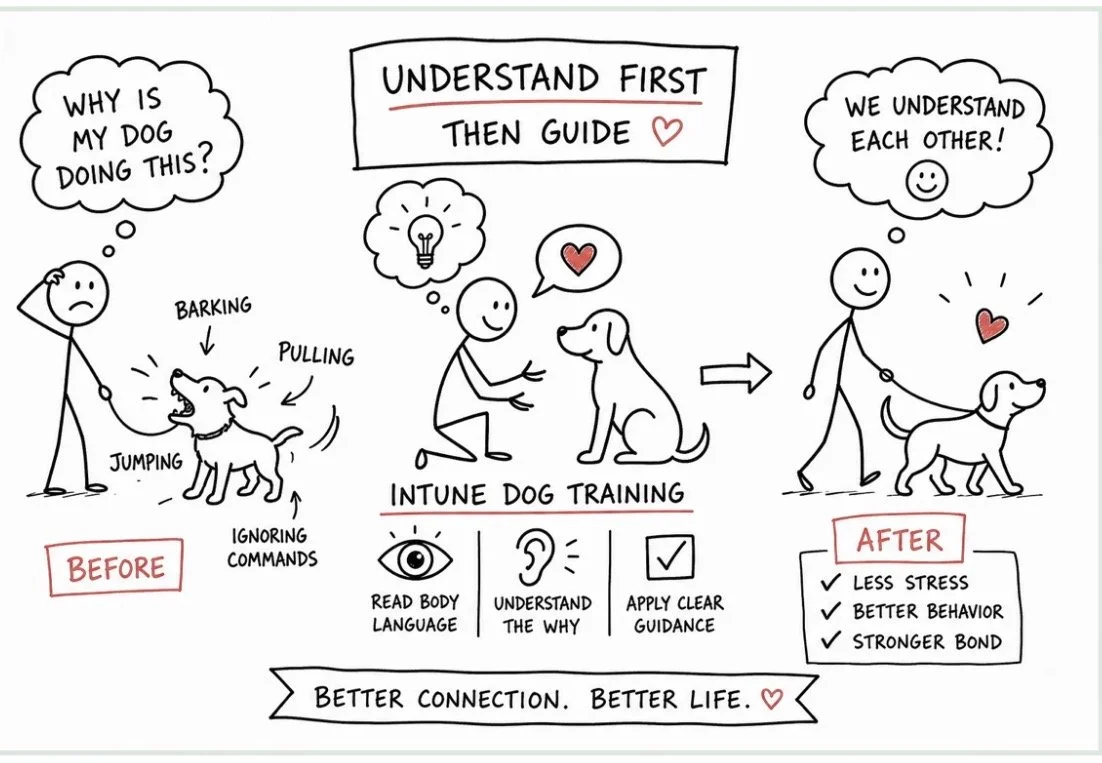
Infographic explaining that you have to understand your dog first before you can successfully command then  them.

Intune dog training starts with a skill most people never develop: learning to read what your dog is actually communicating before you ask anything of them. You've watched the YouTube videos. You've tried the treats, the firm voice, the well-meaning advice from the neighbor whose dog is somehow perfect. And still, your dog pulls on leash, shuts down mid-session, or reacts to things that seem completely random. The frustration is real. But the problem usually isn't your dog.

Many training approaches skip this first step entirely, jumping straight to commands without understanding what the dog is already saying through posture, eye movement, breathing, and a dozen other signals most owners don't know to look for. That foundation changes everything about what comes next.

At Canine Intuition, this idea shapes every program we run across Broward and Palm Beach Counties. Whether it's a first-time puppy evaluation or a multi-week board and train for serious reactivity, the work always starts with observation. This article walks through how that intune dog training approach works in practice and what it looks like across different dogs and different goals.

What Intune Dog Training Actually Means

Getting in tune with your dog is not a metaphor. It's a specific skill set: learning to read the behavioral and emotional signals your dog sends constantly, often before any problem behavior ever surfaces. Body posture, ear position, tail carriage, eye softness, yawning, lip licking, pacing. These signals are happening all the time. Most owners walk right past them.

Much basic obedience guidance starts with commands. Sit. Stay. Leave it. But if your dog is already over threshold, already in a stress response, already shutting down, none of those commands will land the way you expect. The dog isn't being stubborn. They're telling you something, and the training isn't designed to hear it.

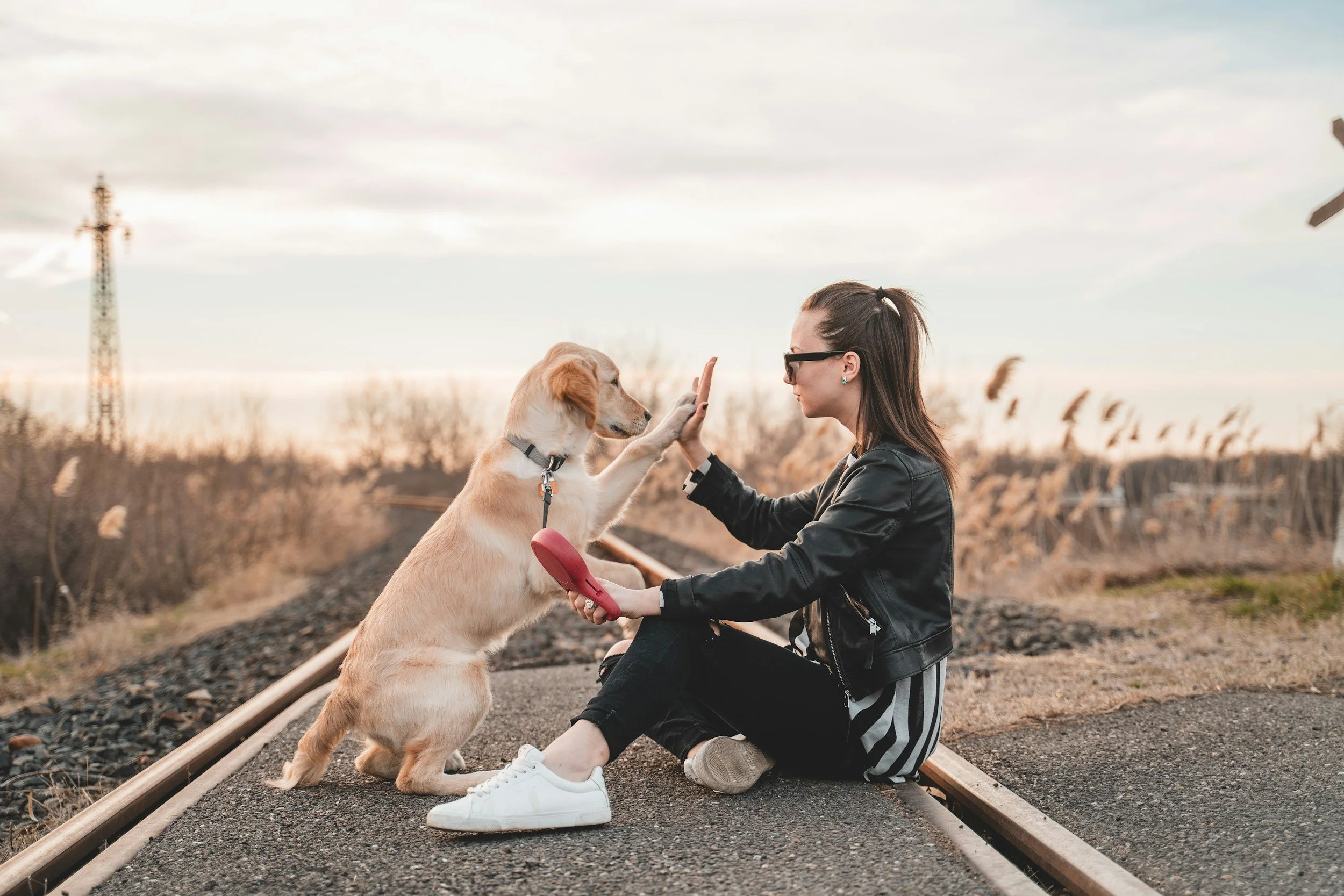
a golden retriever and her owner sitting paw to hand showing the importance of being in tune with your dog. Canine Intuition helps dog owners in South Florida form better bonds with their dogs.

What Your Dog Is Saying Before You Ever Ask for a Sit

The dog who "looks guilty" when you come home is not guilty. They're reading your body language and shutting down from anticipatory fear. The dog who "acts stubborn" during a training session is often overstimulated, and the brain's ability to process new information has hit a ceiling. When a dog "won't listen" in a busy environment, they're most likely in a stress response, not a defiance response, and repeating the cue louder doesn't change that.

Behavior is always communication. Every freeze, every yawn, every lip lick, every whale eye is information. Getting in tune starts with learning to read that information accurately before you ask your dog to do anything else. Once you can do that, the work gets a lot cleaner.

Why One-Way Training Creates Resistance

Training that skips this layer tends to produce two recognizable outcomes: disengagement or escalating reactivity. When a dog is repeatedly asked to perform while their stress signals go unnoticed, they either shut down entirely or the pressure builds into something harder to manage. Animal welfare research consistently shows that unmanaged stress during training correlates with poorer outcomes and increased reactive behavior. Neither result is what anyone signed up for.

Reading your dog first doesn't slow training down. It actually speeds things up, because the dog is in a state where real learning can happen. Cooperation follows clarity, not the other way around.

The Core Techniques Behind Intune Dog Training

A reward-based approach with clear structure isn't about being permissive, and it's not about loading on corrections until a dog complies. It uses positive reinforcement as the primary communication tool while giving dogs the consistent feedback they need to feel safe. Fear-free handling principles are built in from the start, which means we're always working to keep the dog below threshold, not pushing through it.

The goal is a dog who works with you because the communication makes sense to them. Building that kind of cooperation looks like a dog that checks in voluntarily, offers calm behavior at the door, and settles without repeated cuing, not one who complies out of uncertainty about what happens if they don't.

Reward-Based Communication That Actually Sticks

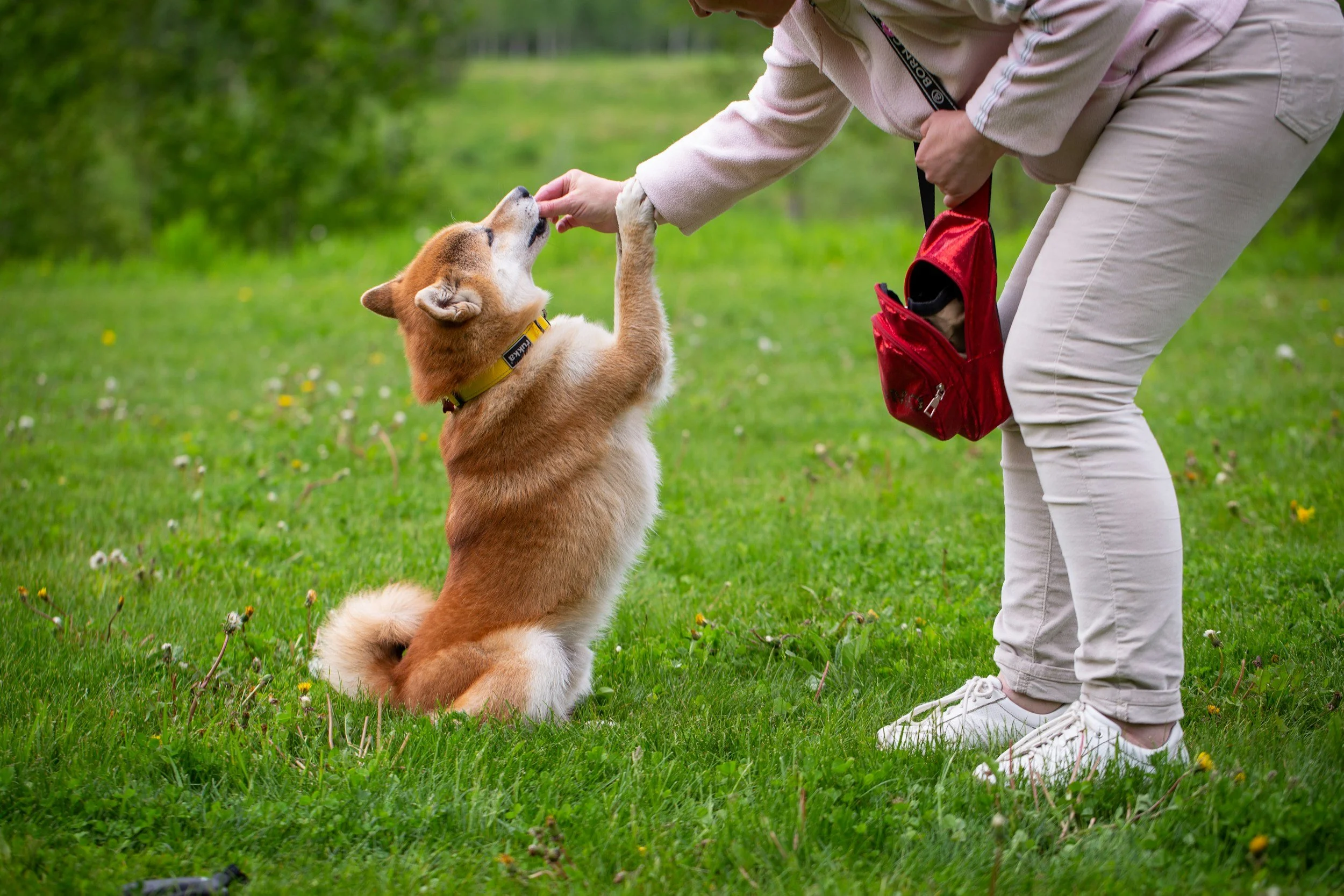
Shiatsu dog getting rewarded for listening to it's owner.

Marker training is the practical engine here. Whether you use a verbal marker like "yes" or a clicker, the principle is the same: the dog needs to know exactly which behavior earned the reward. Timing matters more than most people realize. A reward delivered two seconds late marks a completely different behavior than the one you intended to reinforce, a well-documented principle in applied behavioral learning.

The reward itself matters less than most owners assume. For many dogs, real-world access, play, or movement is more motivating than food in certain contexts. What actually drives results is precision and consistency in the communication loop, not the size of the treat.

Structure and Consistency as a Form of Kindness

Most owners expect rules to create more tension, not less. But dogs living in chaotic or unpredictable environments tend to be more reactive, harder to train, and slower to build confidence, a pattern supported by animal behavior research linking predictability with reduced anxiety and improved learning. Rules are not restrictions. They're a form of clarity, and clarity is what lets a dog relax.

A dog that knows what to expect is a dog that can actually learn. Structure, applied consistently and calmly, is one of the most effective tools in any behavior modification program. Think of it as giving your dog a map instead of dropping them in a maze.

Which Dogs Benefit Most from This Approach

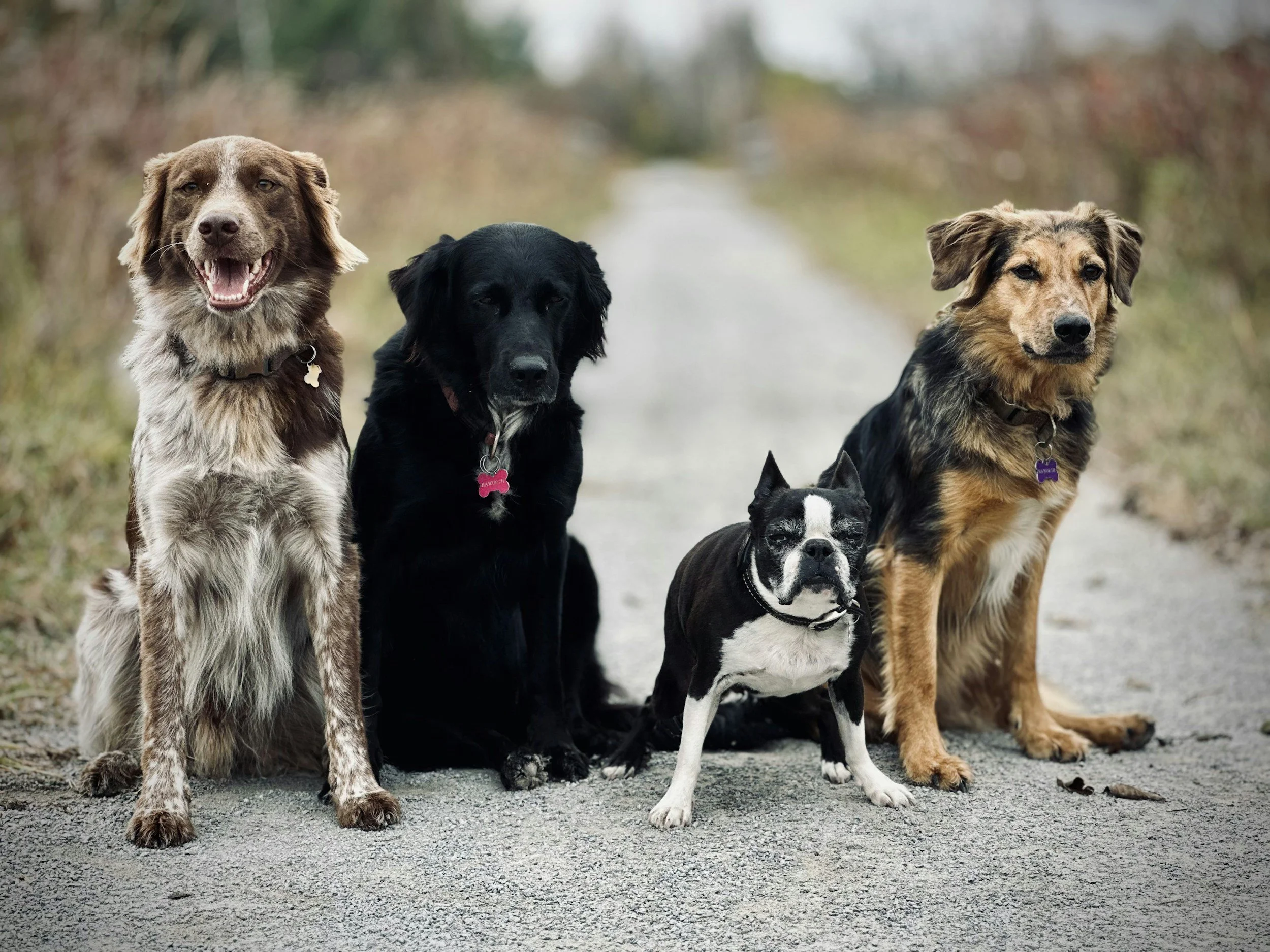
four different breed of dogs show a variety of dogs can experience successful command training in the Broward area.

Not all dogs need the same entry point. Puppies still forming habits, rescue dogs carrying behavioral history they can't explain, and reactive dogs who've been misread for too long each benefit significantly when training starts with genuine observation, for different reasons and in different ways.

Puppies: Building the Right Foundation Early

Puppies are still forming habits, which means early training has a disproportionate impact on adult behavior. The socialization window closes faster than most people expect, and what a puppy learns to do and not do during that period shapes their responses for years. Starting with observation-based puppy training during that window prevents the most common adult behavior problems before they have a chance to develop.

At Canine Intuition, early puppy evaluations assess what the pup is already communicating alongside what they still need to learn. Catching stress signals early and addressing them alongside basic skills is what separates a confident adult dog from one that struggles with new environments.

Rescue Dogs and Reactive Dogs: Rewriting the Script

Rescue dogs often arrive with fear responses, resource guarding, or aggression rooted in experiences no one can fully explain. The second sentence in many of these cases runs the same way: over time, reactivity became the only available coping mechanism, because no one ever taught the dog how to process a stimulating environment differently.

Both profiles improve significantly when training starts with the owner learning to read the dog's state first. Once you understand what's driving the behavior, you can work with it instead of against it. Early measurable progress often shows up within four to eight weeks with consistent work. Meaningful stabilization typically takes three to six months.

Simple Practices to Start Building This Skill at Home

You don't need to wait for a trainer to start this. There are specific daily practices that develop the observation skills owners need to become better partners to their dogs. These don't require equipment, special knowledge, or a lot of time.

The Daily 5-Minute Observation Window

Sit with your dog in a calm space. Say nothing. Do nothing. Just watch. Notice their breathing rate, where they choose to position their body, whether they seek eye contact or avoid it. Notice whether their mouth is relaxed or tight, whether their ears are soft or forward and fixed.

Do this once a day for a week. You'll start to see your dog's baseline clearly, and that baseline becomes the reference point for everything else you observe. When something is off, you'll actually notice it instead of guessing.

One Request, One Reward: Simplifying Your Communication Loop

Most owners repeat commands multiple times before getting a response. Sit. Sit. Siiit. The problem is that repetition teaches the dog the first cue doesn't require action. Clean that up with a simple rule: one cue, then wait. If the dog doesn't respond, the cue wasn't clear yet, or the environment was too distracting. Address that, then try again.

When the behavior happens, reward it immediately and precisely. This one adjustment alone changes how clearly dogs understand what's being asked of them, and it's something any owner can implement the same day they learn it.

Private Lessons vs. Board and Train: Picking the Right Format

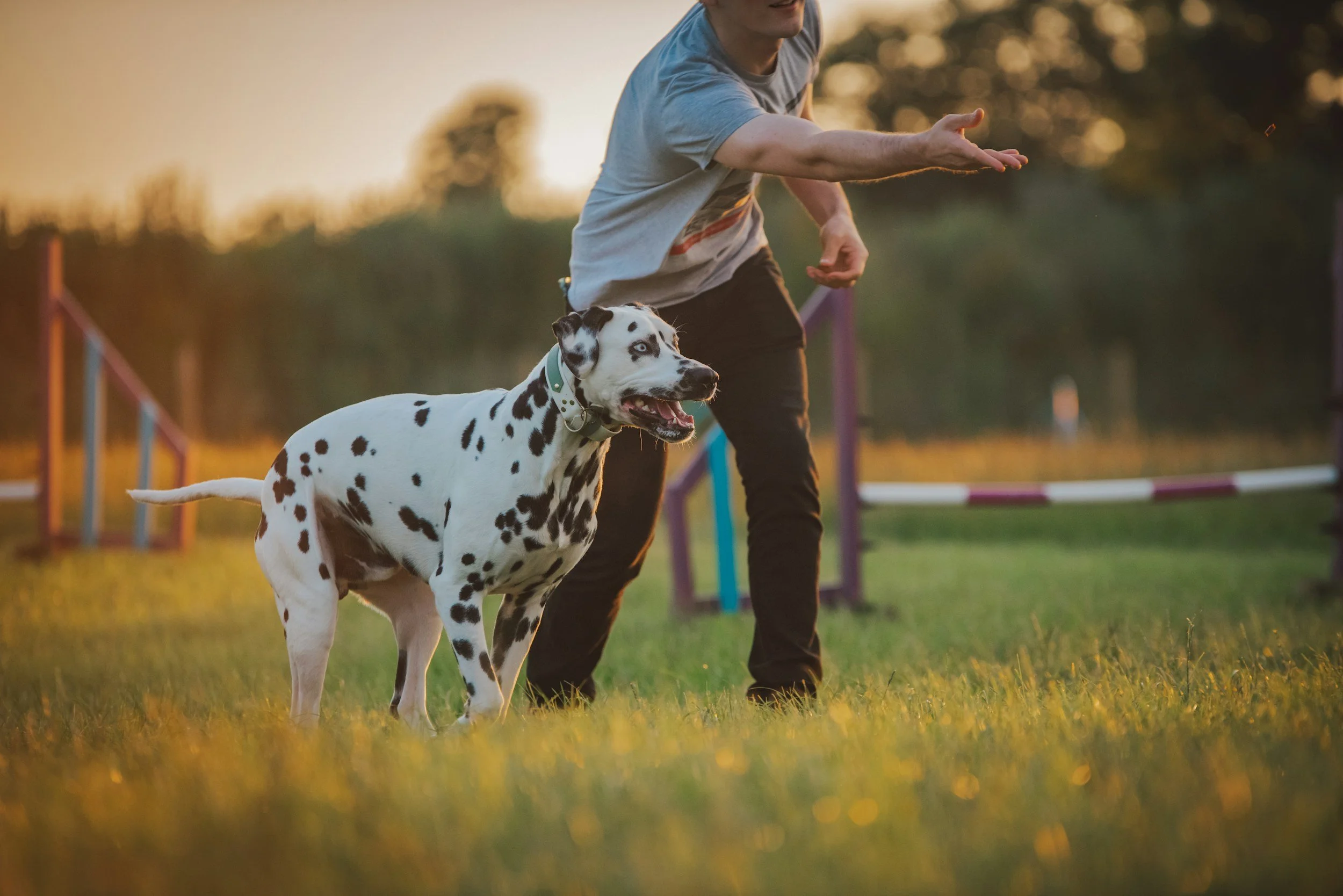
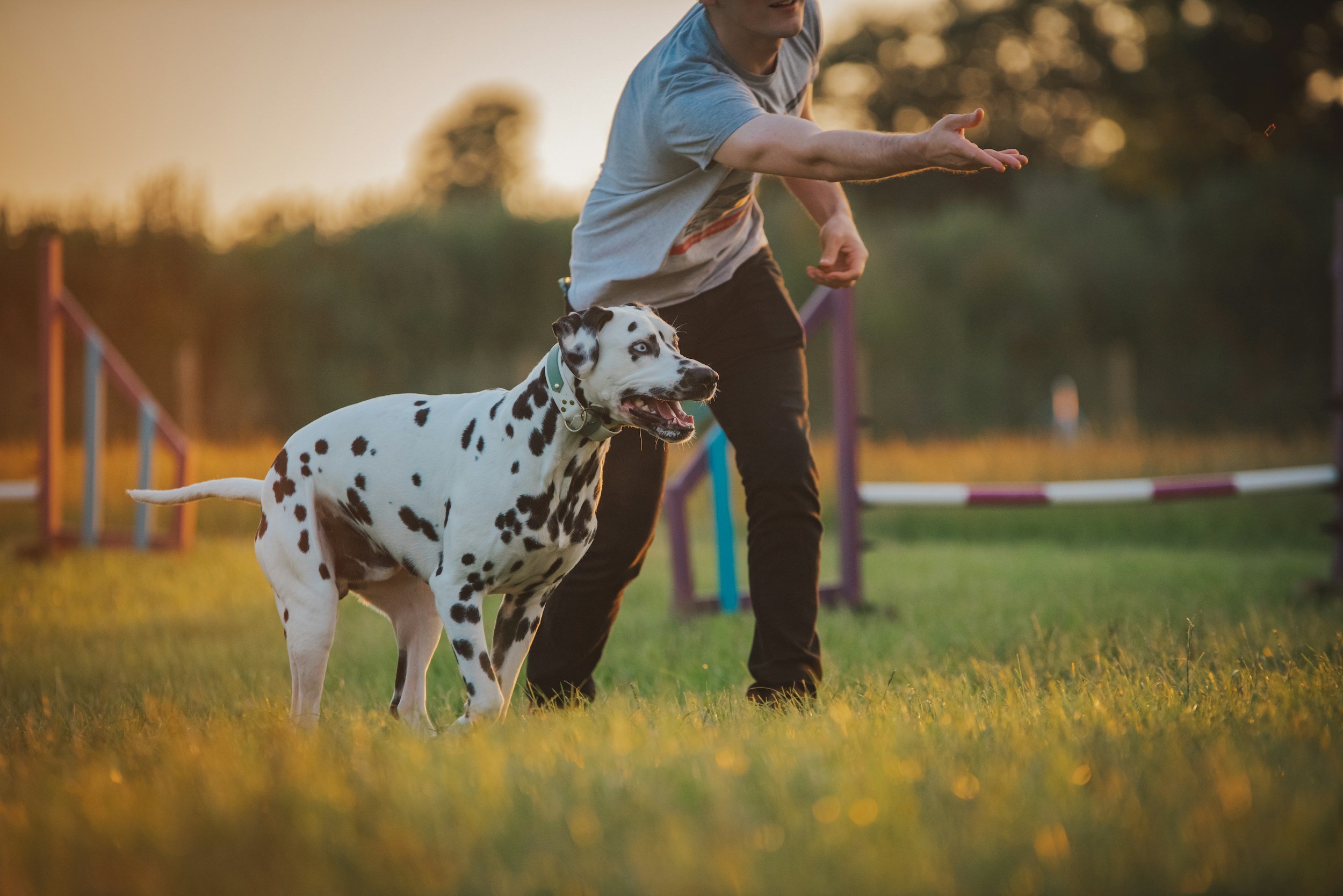
dalmation dog being trained in Deerfield Beach,  to obey commands.

The approach is the same regardless of format. What changes is the pace, the environment, and who carries the training load day to day. Here's an honest breakdown so you can self-select based on your situation.

Private One-on-One Lessons: Best for Mild to Moderate Issues

Private lessons work well for dogs with manageable behavioral challenges: leash pulling, jumping, gaps in basic obedience, early reactivity. They also work well for owners who want to develop their own handling skills alongside the dog. Over six to twelve weeks, the dog and owner build fluency together in the actual environment where most of their life happens.

This format tends to produce strong long-term retention because the owner is doing the work in real time, in the real context. The training generalizes naturally because it's happening at home from the start.

Board and Train: When Immersion Changes Everything

For dogs with serious reactivity, aggression, or anxiety that hasn't responded to other approaches, a residential board and train program changes the equation. Daily, repeated, professionally managed training in a structured environment accelerates change in ways that weekly sessions can't match. Programs commonly run two to four weeks, and early improvements are often visible within the first several days to a couple of weeks depending on the dog.

The transfer work after pickup is critical. The best outcomes consistently come from pairing a board and train with follow-up private coaching at home, so the dog generalizes new behavior into real-world settings with their owner leading the way. The program builds the foundation; the owner maintains it.

How Canine Intuition Works with South Florida Dogs

At Canine Intuition, we've spent decades applying this intune dog training approach with hundreds of dogs across Broward and Palm Beach Counties. The work isn't generic and it doesn't start with a sales pitch. It starts with a behavioral evaluation that gives us a real picture of what the dog is communicating and where the owner's observation skills have gaps.

One anonymized case from Broward County: a rescue dog who arrived with separation anxiety and resource guarding, history mostly unknown. Three weeks in a structured residential program, followed by private coaching with the owner, built a predictable daily routine that the owner reported holding six months later. From Palm Beach County: a reactive adolescent whose owner learned to read stress signals early enough to interrupt the escalation cycle before it peaked. Within eight weeks, the owner was managing trigger encounters that had previously been overwhelming for both of them.

What Happens When You Book an Evaluation with Us

The evaluation is a working session, not a meet-and-greet. We assess the dog's communication patterns, identify the gaps in how the owner is reading them, and build a clear picture of what's actually driving the behavior. You walk away with a real plan, not a brochure.

If you're in Broward or Palm Beach County and want professional support building this skill alongside your dog, reach out to Canine Intuition to schedule your evaluation. The first step is simply showing up and letting us take a real look together.

Most Behavior Problems Are Communication Problems

That's the core of it. Not technique problems. Not breed problems. Not stubbornness or spite. Many of the most common behavior issues trace back to a dog saying something clear that the owner doesn't yet have the language to hear. That's a solvable problem.

Intune dog training, reading the signals your dog is already sending, adjusting your communication to meet them where they are, is what makes training stick. Whether you're working through early puppy habits, rehabbing a rescue, or managing reactivity that's been building for months, observation is where the work starts. Once you see your dog clearly, everything else moves faster and holds longer.

If you're ready to build that foundation with professional guidance, Canine Intuition is here for you!

Book an evaluation today and let's take a real look at what your dog is telling you.

Magic Bullet or Money Pit? The Unfiltered Truth About Board & Train

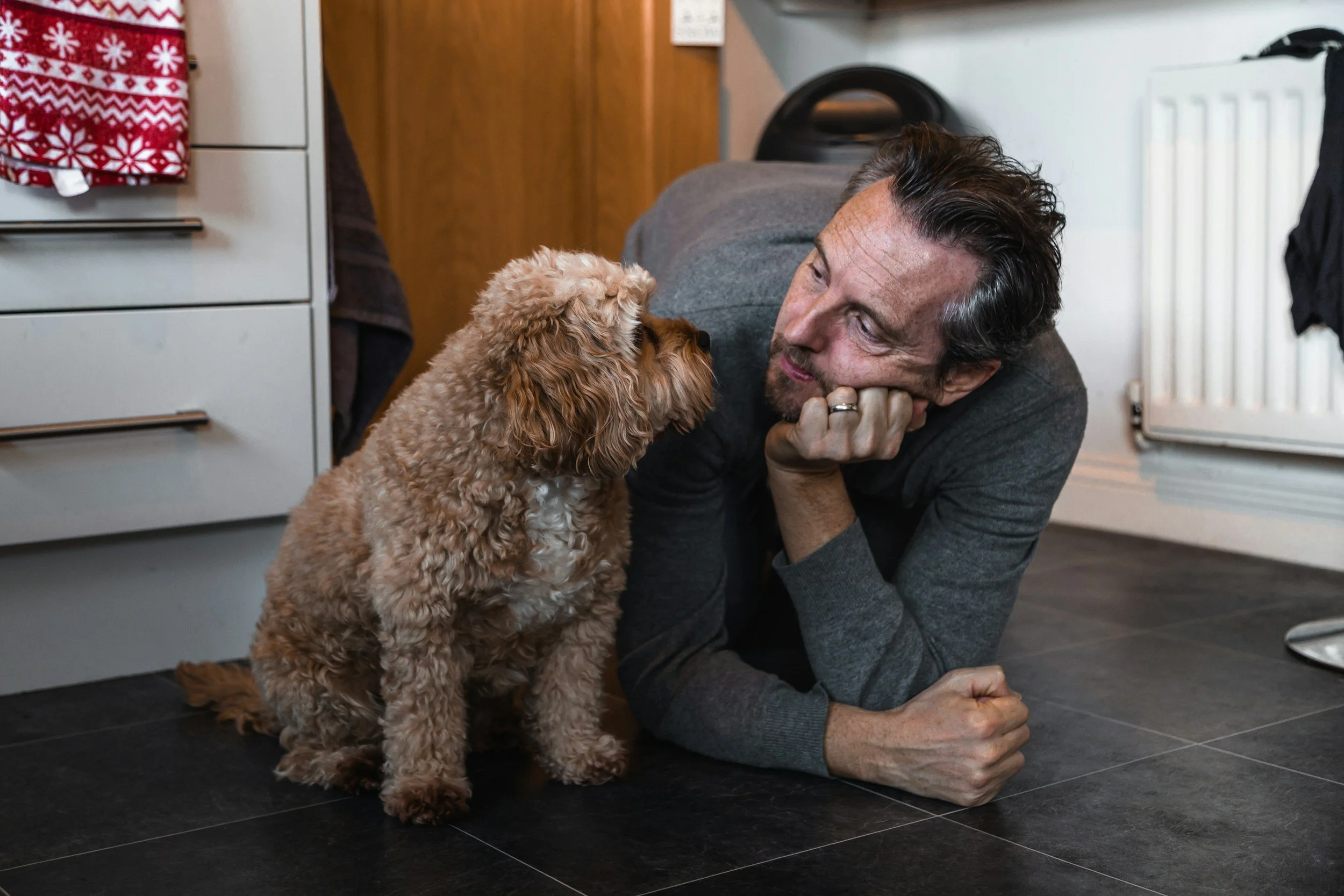
A confused dog owner looking at his dog trying to figure out if board training is a right fit for his canine.

The dream is undeniably tantalizing: you drop off your four-legged chaos agent for a few weeks, and you pick up a polished, serene angel who greets dinner guests with a polite nod, heels seamlessly past distractions, and practically folds your laundry.

Picture this: you’re sitting at a dog-friendly bistro on Las Olas Boulevard in Fort Lauderdale or Atlantic Avenue in Delray Beach. Suddenly, a brave South Florida iguana darts across the sidewalk. Your 80-pound rescue dog lunges, turning your iced latte into a lap pool and dragging you across the concrete plaza. As you pick up your shattered pride, you find yourself staring at your phone at 2:00 AM, desperately searching for "dog boot camps near me."

It sounds like canine Hogwarts. But is a Board and Train program actually worth your hard-earned money, or is it just an overpriced resort stay with a fancy title?

After 20 years of training dogs across Broward and Palm Beach counties—holding the highest certifications in the industry—we at Canine Intuition Dog Training have seen the good, the bad, and the outright ridiculous. Here is the ultimate, unfiltered, and deeply practical guide to whether a Board and Train program is worth the investment for you and your dog.

What Exactly IS a Board and Train Program?

A true Board and Train program is not doggy daycare with a few "sits" tossed in during potty breaks. Nor is it standard kennel boarding where a dog sits in a crate for 23 hours a day.

A reputable Board and Train program is an intensive behavioral immersion experience. Your dog lives directly with or under the constant supervision of professional trainers. Every interaction—from morning walks to feeding time, crate entrance, threshold manners, and evening downtime—is leveraged as a learning opportunity. It is the canine equivalent of sending a student to an immersive language institute in Spain rather than having them take Spanish once a week for 45 minutes.

The Good: Why Board & Train Delivers Massive Results

When executed by master-level professionals, an immersive training program is unequivocally the fastest way to modify behavior and build solid obedience.

  • 24/7 Behavioral Consistency: Dogs are efficiency machines. If they can find a loophole in your enforcement 50% of the time, they will exploit it. In an immersive environment, loopholes don't exist. Professionals maintain strict boundaries around the clock, meaning bad habits are instantly interrupted and correct behaviors are reinforced hundreds of times a day.

  • Professional Mechanics and Split-Second Timing: Dog training is a physical skill that relies heavily on muscle memory, leash handling, body language, and split-second timing. The average owner rewards or corrects a behavior two to three seconds too late, accidentally reinforcing the wrong action. Professional trainers catch micro-behaviors instantly, communicating with pinpoint accuracy so the dog learns ten times faster.

  • Real-World Proofing in Distraction-Heavy Environments: Teaching a dog to sit in a quiet living room in Boca Raton is easy. Teaching that same dog to hold a "Place" command while kids rollerblade past at a park in West Palm Beach requires serious proofing. A quality Board and Train program takes your dog directly into high-distraction, real-world environments—busy outdoor plazas, parks, shopping districts, and crowded streets—building real neutrality and focus under pressure.

  • Heavy Lifting and Habit Breaking Done for You: Reversing deeply ingrained behaviors like leash reactivity, resource guarding, severe counter-surfing, or persistent door-darting takes immense physical and emotional energy. Letting an experienced trainer break the cycle and build the new neural pathways saves owners months of raw frustration and physical exhaustion.

A certified master dog trainer practicing loose-leash walking with a dog outdoors in Palm Beach, Florida.

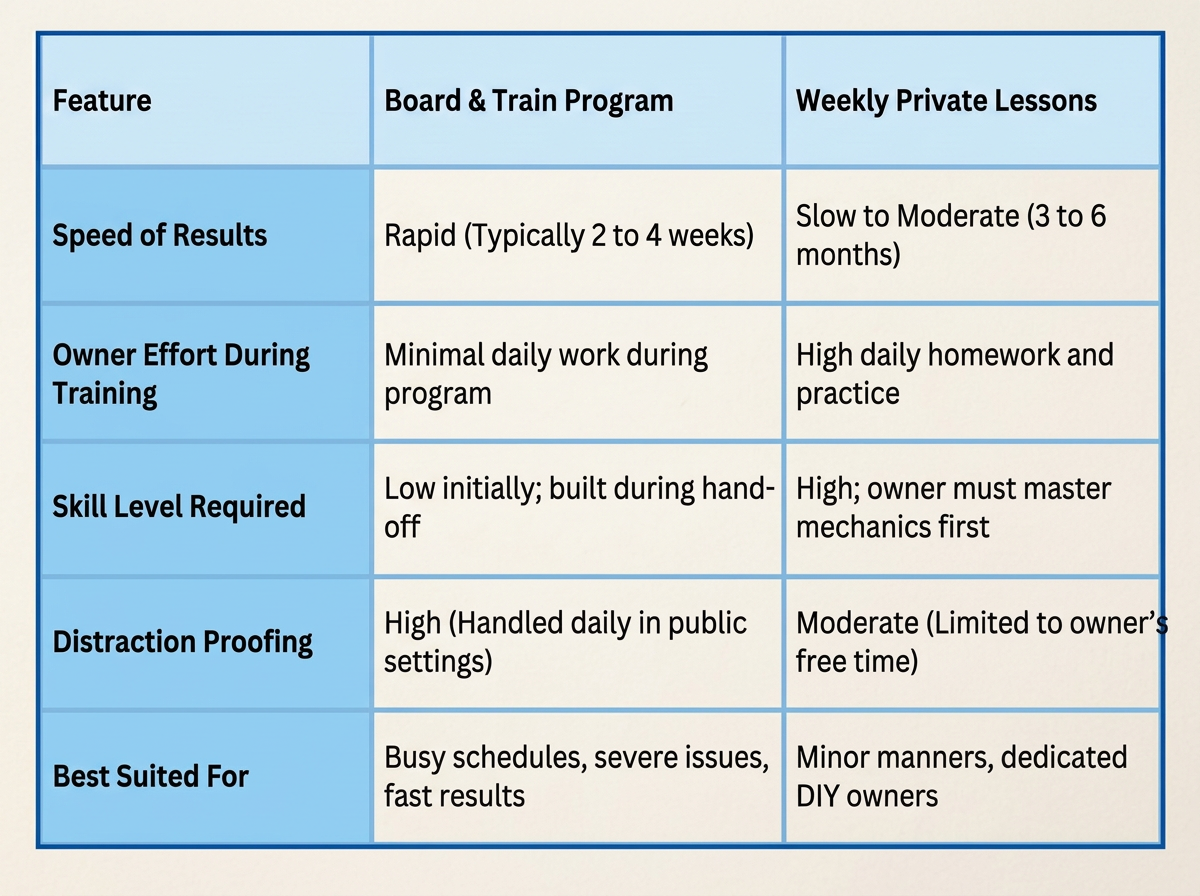
Comparing Options: Board & Train vs. Weekly Private Lessons

The Catch: What Bad Trainers Won't Tell You

If Board and Train were a magical cure-all, every dog on the block would be a perfect gentleman. The reality is that Board and Train programs carry significant risks if you choose the wrong facility.

  • The "Owner Transfer" Trap: A master trainer can get your dog walking like a pristine show champion in ten days. But dogs don't respect titles; they respect handling. If the facility does not invest heavily in teaching you how to handle your dog, your pup will revert to old habits the moment they step back onto your tile floors in Broward County.

  • The Wild West of the Dog Training Industry: Did you know that the dog training industry is almost entirely unregulated? Literally anyone can buy a leash, print a business card, and claim to run a "dog boot camp." Uncertified, inexperienced trainers often rely heavily on harsh, unvetted methods or extreme isolation, resulting in dogs that are either terrified, shut down, or temporarily suppressed rather than genuinely trained.

  • Context Shock and Generalization Deficits: Dogs are contextual learners. They associate rules with specific places and specific people. A dog might understand that barking at cars is forbidden at a pristine training facility, but assume the rule doesn't apply when they are back home in Palm Beach with their favorite human. Without structured transition lessons in your home environment, context shock can erase weeks of progress.

What 20 Years of Experience Taught Us

At Canine Intuition Dog Training, we have spent two decades refining our approach across South Florida. We hold the highest industry certifications because we believe dogs and their owners deserve science-backed, balanced, and humane training methodologies that actually hold up in the real world.

Board and Train is not a substitute for owner involvement—it is an accelerated launchpad.

You aren’t just paying for someone to train your dog; you are paying to skip the grueling, frustrating trial-and-error phase. The true magic of our program doesn't happen when we have your dog—it happens during our comprehensive hand-off and transition lessons. We don't just hand you a leash and say "good luck." We coach you, fine-tune your body language, test you in real-world scenarios, and provide ongoing support so that the respect and focus we built with your dog transfers seamlessly to you.

A well-behaved dog at a pet-friendly beach in Broward County after completing a balanced board and train program.

The Ultimate Insider Checklist: How to Choose a Board & Train

  • Check Credentials: Ask for verified, recognized national certifications—not self-proclaimed titles or weekend workshop certificates.

  • Inspect Hand-Off Commitment: Ensure the program includes at least 2–3 structured, hands-on transfer sessions with you before completion.

  • Review Living Conditions: Tour the facility or home where your dog will sleep and train. Avoid warehouse-style kennels where dogs sit in crates for 20+ hours a day.

  • Confirm Post-Graduation Support: Choose a facility that offers follow-up lessons, refreshers, or phone support to protect your long-term investment.

Is Board and Train Worth It for You?

If you are struggling with severe behavioral issues, possess a busy work schedule that leaves little time for hours of daily reps, or simply want a public-ready companion who can handle the vibrant, high-distraction lifestyle of South Florida, Board and Train is worth every single penny.

However, it is only worth it if you pair your investment with a certified, battle-tested team that prioritizes fair communication, real-world proofing, and thorough owner education.

Ready to transform your chaotic canine into a calm, confident companion?

Serving Broward and Palm Beach counties with 20 years of elite expertise, Canine Intuition Dog Training turns real-world distractions into lifelong obedience.

Contact our team today to schedule an evaluation and discover the ideal training path for your family!