

Bringing home a fearful rescue dog?
Canine Intuition brings 20 years of certified dog behavioral expertise in Broward and Palm Beach to share the ultimate 30-day trust-building protocol

Adopting a rescue dog is a commitment to providing safety and stability, but the transition period often requires significantly more patience and strategy than new owners anticipate. When a fearful dog enters a new home, they are not immediately aware that they have been rescued. Instead, they are experiencing a complete disruption of their environment, routine, and sense of safety.
For a dog prone to fear or anxiety, initial reactions often include hiding, hyper-vigilance, refusal to eat, or avoidance of human contact. At Canine Intuition Dog Training, we emphasize that building genuine trust is a deliberate, step-by-step process.
This guide outlines a clear, 30-day behavioral protocol designed to lower stress levels, establish security, and foster long-term confidence in a fearful rescue dog.
Understanding the Canine Reality: The 3-3-3 Rule
Before you try to bribe your terrified pup with expensive freeze-dried liver bites, you need to understand where their brain is at. To a fearful rescue dog, you aren't their savior yet; you are a giant, unpredictable predator holding a strange rope who brought them to an unfamiliar castle full of weird smells and loud noises.
Professional trainers rely on the 3-3-3 Rule as a realistic roadmap for canine decompression:
The First 3 Days: Feeling overwhelmed, anxious, and shut down. They may refuse to eat, hide, or test boundaries out of sheer panic.
The First 3 Weeks: Starting to settle in, learning your daily routine, and realizing they are safe—though their true personality (and bad habits) will start emerging.
The First 3 Months: Building genuine trust, feeling completely secure in their home, and bonding deeply with their family.
Trying to rush this process is like asking someone to solve complex calculus while riding a runaway rollercoaster. True confidence takes time.
Days 1–3: Decompression and Lowering the Cortisol Spike
The single biggest mistake well-meaning owners make during the first 72 hours is doing too much, too fast. Resisting the urge to host a welcome-home party for your neighbors is crucial.
Create a "Safe Cave": Designate a quiet room or corner away from foot traffic. Place a secure crate covered with a blanket (leave the door open if they aren't crate-trained yet), an orthopedic bed, and a water bowl. When they are in their safe zone, human interaction stops completely.
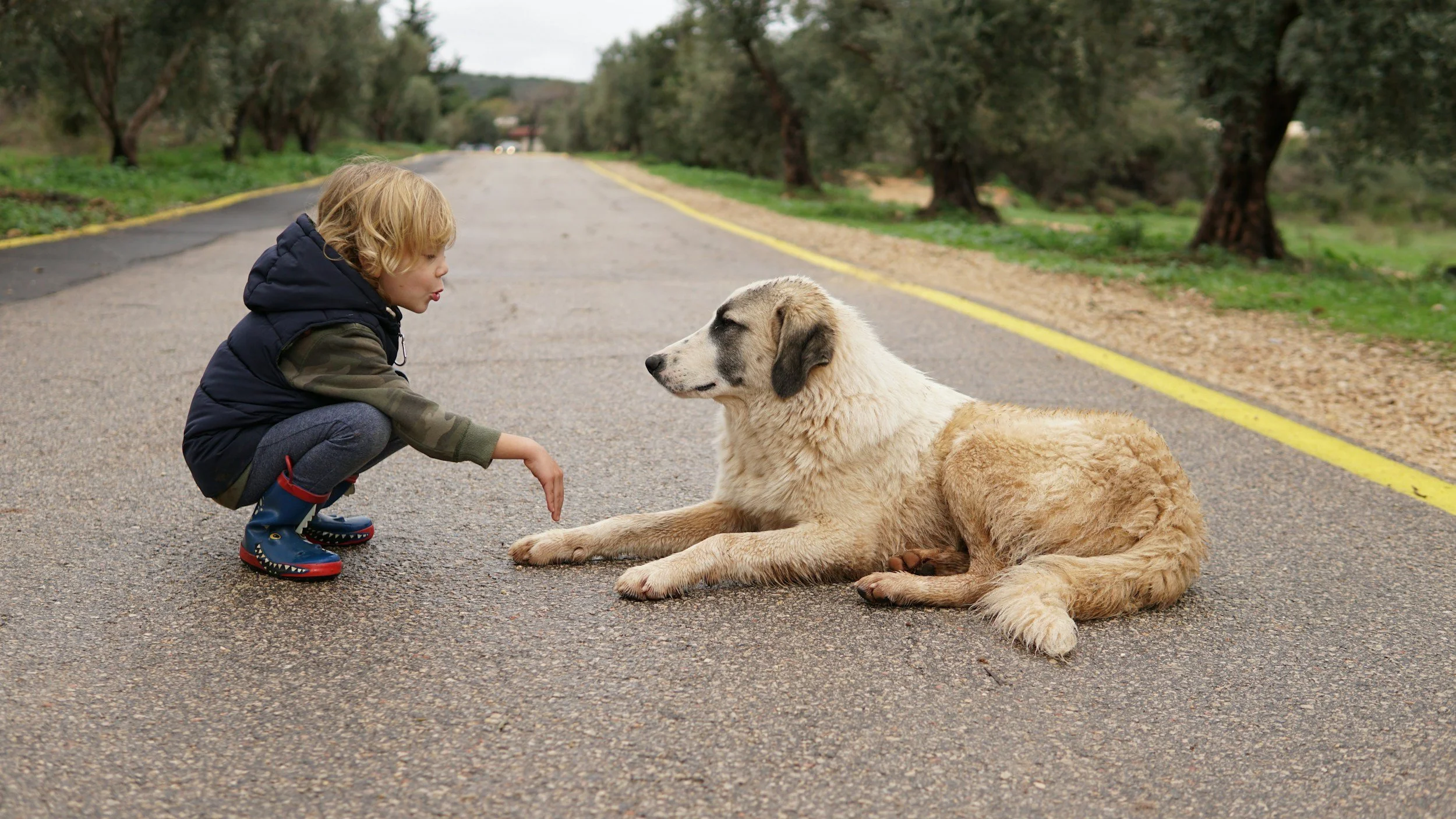
Master the Art of Ignoring Your Dog: It sounds counterintuitive, but ignoring a fearful dog is the highest form of respect you can show them. Avoid direct eye contact, towering over them, or reaching out to pet them. Let them observe you navigating your home without feeling pressured to interact.
Minimize Environmental Stimuli: South Florida presents a unique barrage of triggers—blaring air conditioners, sudden afternoon thunderstorms, pool pumps, and buzzing lawn care crews. Keep your home quiet. Soft music or white noise can drown out sudden household sounds while your dog's stress hormones slowly drop.
Days 4–14: Establishing Predictable Routines
Fear thrives in uncertainty. Structure creates security. Once your rescue dog realizes that their daily life is completely predictable, their nervous system finally shifts out of fight-or-flight mode.
The Power of the Clock: Feed your dog, walk them, and crate them at the exact same times every day. When a dog knows precisely when their next meal is coming and when they will be taken out to potty, their internal anxiety dial drops significantly.
Drag-Leash Protocol for Safety: If your rescue dog is skittish, trying to corner them to clip on a leash for potty breaks will destroy trust instantly. Attach a light, handle-free drag leash to their collar inside the house. If you need to move them, simply pick up the end of the leash calmly without hovering over them.
Low-Pressure Hand Feeding: Ditch the food bowl for half of their daily meals. Sit on the floor sideways (never facing them directly), toss small bits of high-value kibble or treats near them, and look away. Let them approach the food on their terms.
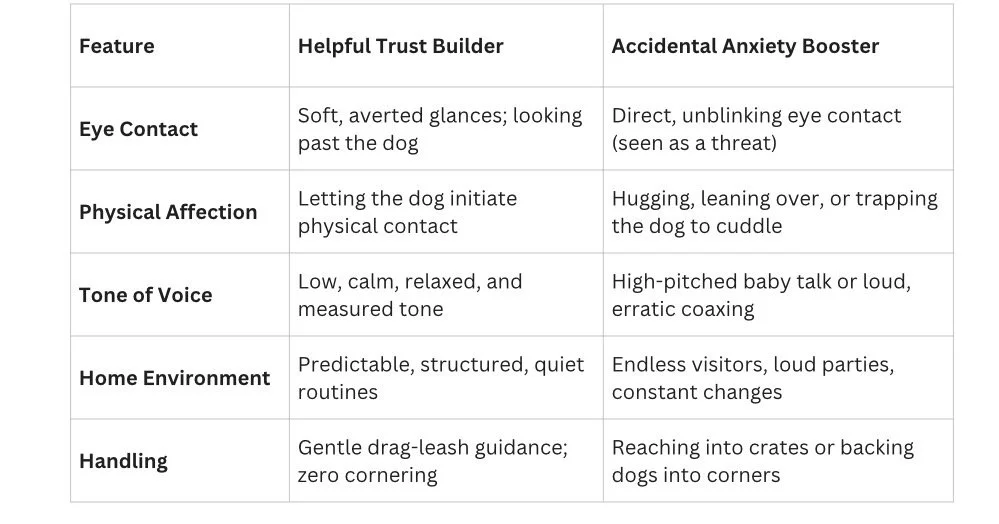
Helpful Trust Builders vs. Accidental Anxiety Boosters
Days 15–30: Micro-Exposures and Building Real Confidence
By week three, your dog's true personality will begin to shine. Now that baseline trust is established, you can gently expand their world without overwhelming their progress.
Controlled Micro-Exposures: Introduce new experiences in tiny, bite-sized pieces. If your dog is terrified of the sliding glass door leading to the patio, don't force them outside. Reward them simply for looking at the door, then for standing two feet away, and eventually for stepping one paw outside onto the patio.
Confidence-Building Obstacle Courses: Use safe, everyday items to teach problem-solving. Place a treat under a folded towel, or let them navigate around a cardboard box. Overcoming small physical challenges builds mental resilience and teaches them to look to you for encouragement.
Calm Loose-Leash Explorations: Avoid high-volume areas like crowded South Florida dog parks or busy outdoor malls. Stick to quiet suburban sidewalks in Broward or Palm Beach during off-peak hours. Allow them to sniff thoroughly; sniffing is a natural, calming behavior that lowers a dog's heart rate.
When to Call Certified Master Trainers
Love, patience, and rotisserie chicken can solve 80% of rescue dog jitters. But when fear manifests as extreme resource guarding, severe separation distress, or fear-based aggression (growling, snapping, or lunging), attempting DIY behavioral modification can put you and your dog in danger.
At Canine Intuition Dog Training, we bring 20 years of certified experience to help owners navigate complex behavioral cases safely. We evaluate your dog's unique temperament, identify environmental triggers, and build a custom, balanced roadmap that converts fear into lasting confidence.
Trust is built in drop-by-drop increments, but it can be lost in bucketfuls. By providing clear boundaries, unconditional patience, and structured guidance during these critical first 30 days, you aren't just rescuing a dog—you are giving them the gift of true peace of mind.