

Bringing a new puppy home, whether it’s in a high-rise condo in Deerfield Beach, a luxury apartment in Boca Raton, or a beachside rental in Fort Lauderdale is an exciting milestone!
However, when you don't have a private, fenced-in backyard, traditional housebreaking advice quickly falls short. Navigating endless hallways, busy elevators, strict HOA regulations, and South Florida’s unpredictable tropical weather can transform simple potty breaks into daily logistical hurdles.
Potty training a puppy in an apartment requires a structured strategy, consistency, and an understanding of high-rise logistics.
This step-by-step guide and daily schedule will help you raise a fully housebroken puppy without losing your sanity or your security deposit.
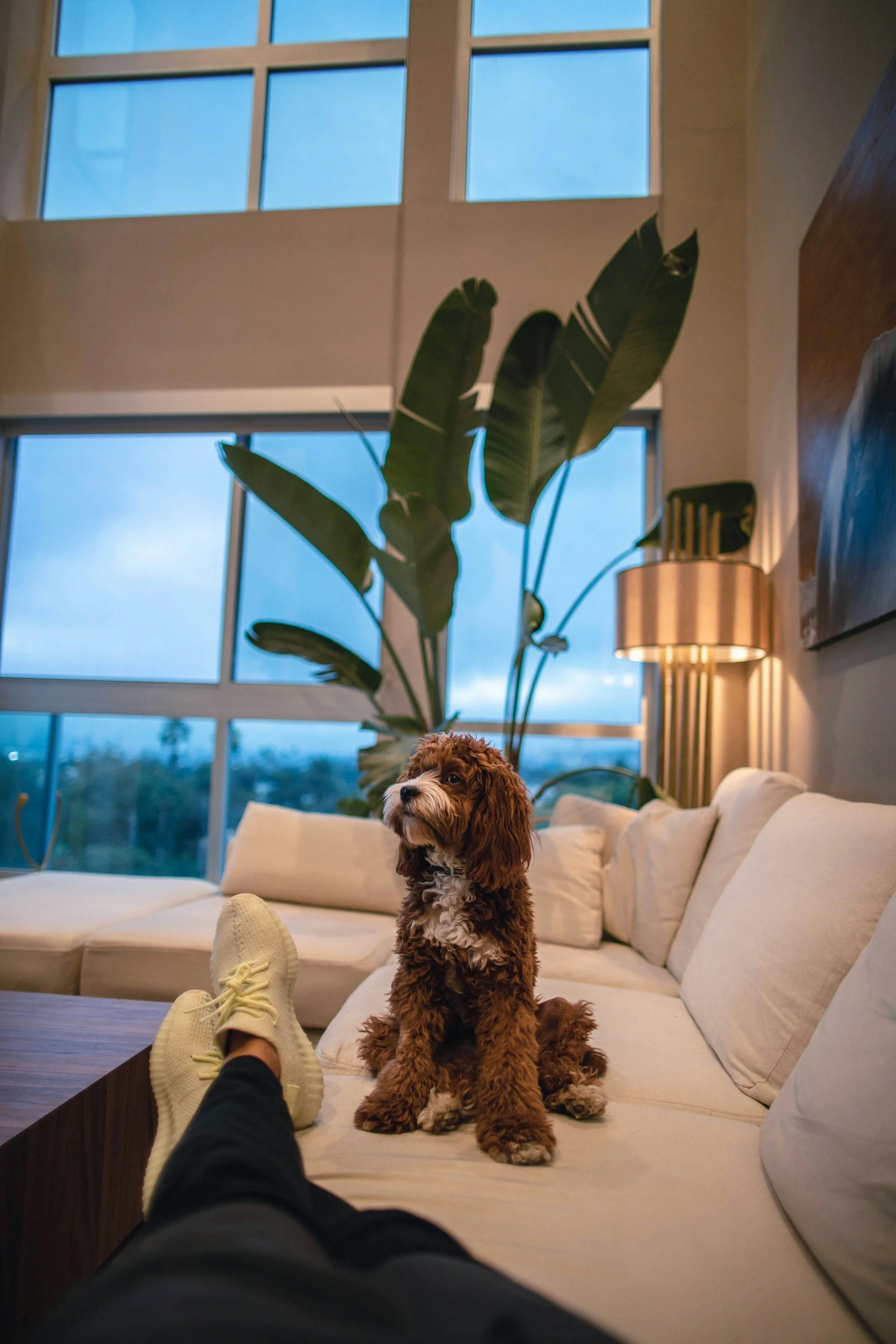
The High-Rise Challenge: Why Apartment Potty Training Needs a Custom Strategy
Housebreaking a puppy in a suburban single-family home usually involves opening a sliding glass door to a backyard. In a condo or apartment, the distance between your living room and the nearest patch of green grass can involve a long hallway walk, a 15-story elevator ride, two fob-accessed security doors, and a trek across a bustling lobby.
To a eight-week-old puppy with a bladder the size of a walnut, that 5-minute journey feels like an eternity. If your puppy feels the urge to eliminate while standing in a carpeted hallway or waiting for an elevator to arrive on the 10th floor, an accident is almost guaranteed.
Furthermore, dog owners across Broward and Palm Beach counties face unique regional challenges:
Intense Afternoon Downpours: Florida’s summer rainy season brings sudden, heavy thunderstorms that make outdoor trips unpleasant or unsafe.
Scorching Surface Temperatures: Concrete walkways, asphalt parking lots, and artificial turf in areas like Boca Raton and Pompano Beach heat up quickly during midday hours, risking paw pad burns.
Communal Health Hazards: Public grass patches surrounding apartment complexes are frequented by dozens of dogs daily. Before your puppy completes their full vaccination series (typically around 16 weeks), exposure to these areas carries risks of parvovirus, giardia, and intestinal parasites.
To succeed, you need a proactive routine that accounts for your building’s layout, your puppy’s physical limits, and South Florida’s climate.
Step 1: Choosing Your Primary Potty Spot
Before bringing your puppy home, decide where their designated potty area will be. Consistency is the single most important factor in housebreaking. Changing your mind every few days confuses your puppy and prolongs the process.
Option A: The Dedicated Outdoor Grass Area
If you live on the ground floor or in a low-rise building in areas like Lighthouse Point or Deerfield Beach with quick access to a quiet green space, training your puppy to go outdoors from day one is ideal.
Pros: Teaches proper outdoor substrate preference immediately; no transition phase needed later.
Cons: Requires fast travel time; uninoculated puppies must avoid heavily trafficked public grass.
Option B: The Balcony Real-Grass Patch
For residents in mid-rise and high-rise buildings across Fort Lauderdale or downtown Boca Raton, setting up a hydroponic real-grass patch (such as Fresh Patch or DoggieLawn) on a covered balcony is often the most practical solution.
Pros: Provides immediate access to real grass; keeps young puppies safe from communal ground diseases; protects against midnight elevator trips; shields you from sudden Florida rainstorms.
Cons: Requires regular subscription replacement costs; requires strict hygiene protocols to avoid odor issues in tropical heat.
Pro-Tip for South Florida Balconies: Avoid standard plastic pee pads or artificial turf on sunny balconies. Synthetic turf absorbs heat rapidly and traps ammonia smells in humid air, while paper pee pads can tear or blow away in coastal ocean breezes. Real hydroponic grass naturally breaks down liquid waste and neutralizes odors when kept shaded and lightly misted.
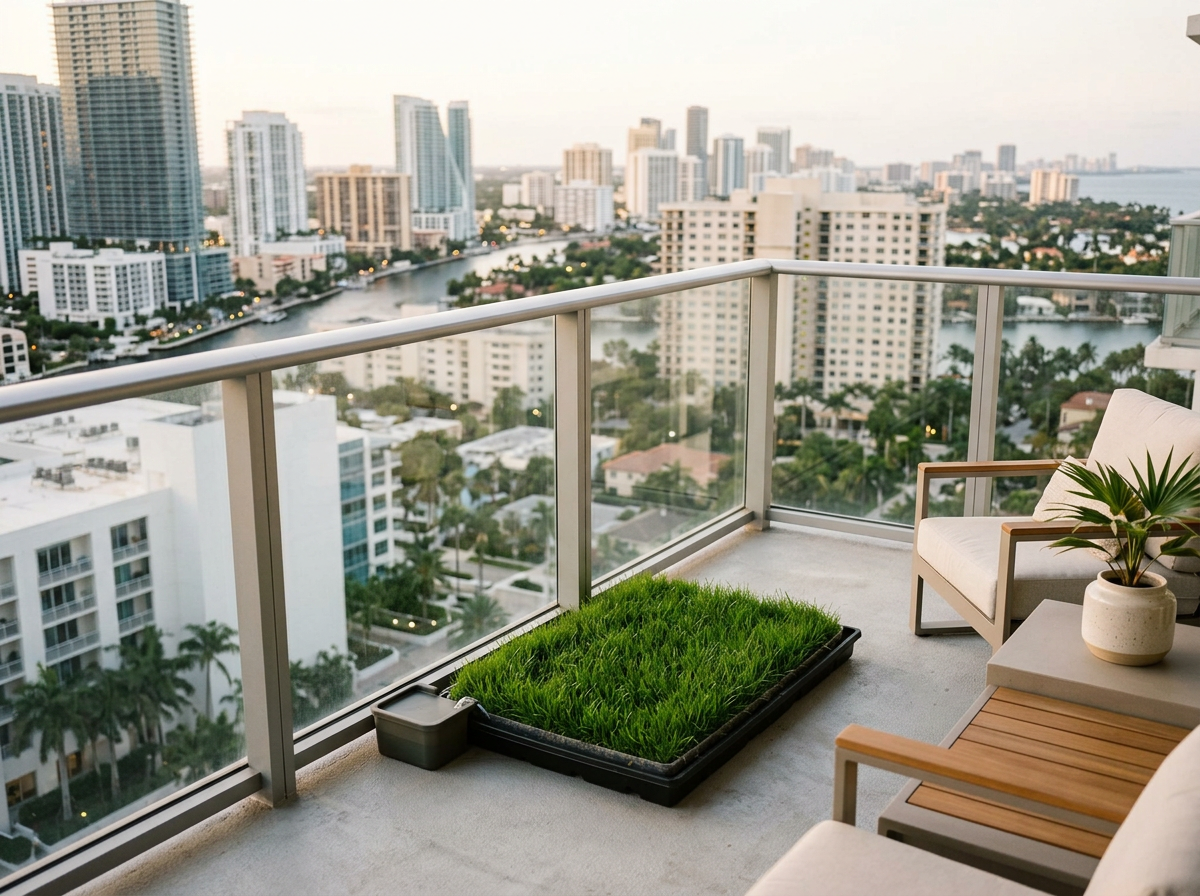
Click photo to purchase your fresh grass hydroponic puppy pad! Great for potty training puppies in apartments.
Option C: Indoor Hydroponic Grass or Tray System
If your apartment lacks balcony space or building rules forbid balcony dog pads, establish an indoor designated potty zone using a real grass tray system placed in a low-traffic area, such as a spare bathroom or utility space.
Avoid Generic Pee Pads: Paper pads teach puppies that soft, flat indoor surfaces (like rugs, bathmats, and throw pillows) are acceptable bathroom spots. If you intend for your dog to eventually go outside, use real grass indoors to build a clear surface association.
Essential Apartment Potty Training Gear Checklist
Having the right tools ready simplifies your daily routine and protects your apartment’s flooring:
Enzymatic Cleaner: Standard household cleaners remove surface stains but leave microscopic odor markers that attract puppies back to the same spot. Enzymatic formulas break down organic compounds completely.
A 4-Foot Fixed Nylon Leash: Keep your puppy on a leash during potty trips—even inside your apartment or on your balcony—to keep them focused on the task.
High-Value Training Treats: Reserve soft, high-value treats (such as freeze-dried liver or small chicken pieces) exclusively for immediate rewards after successful elimination.
Black Light / UV Stain Detector: Useful for locating hidden urine spots on apartment carpet or baseboards before odors set in.
A Well-Fitted Harness & Collar: Essential for safe navigation through public lobbies, parking garages, and busy sidewalks in urban hubs like Delray Beach and Fort Lauderdale.
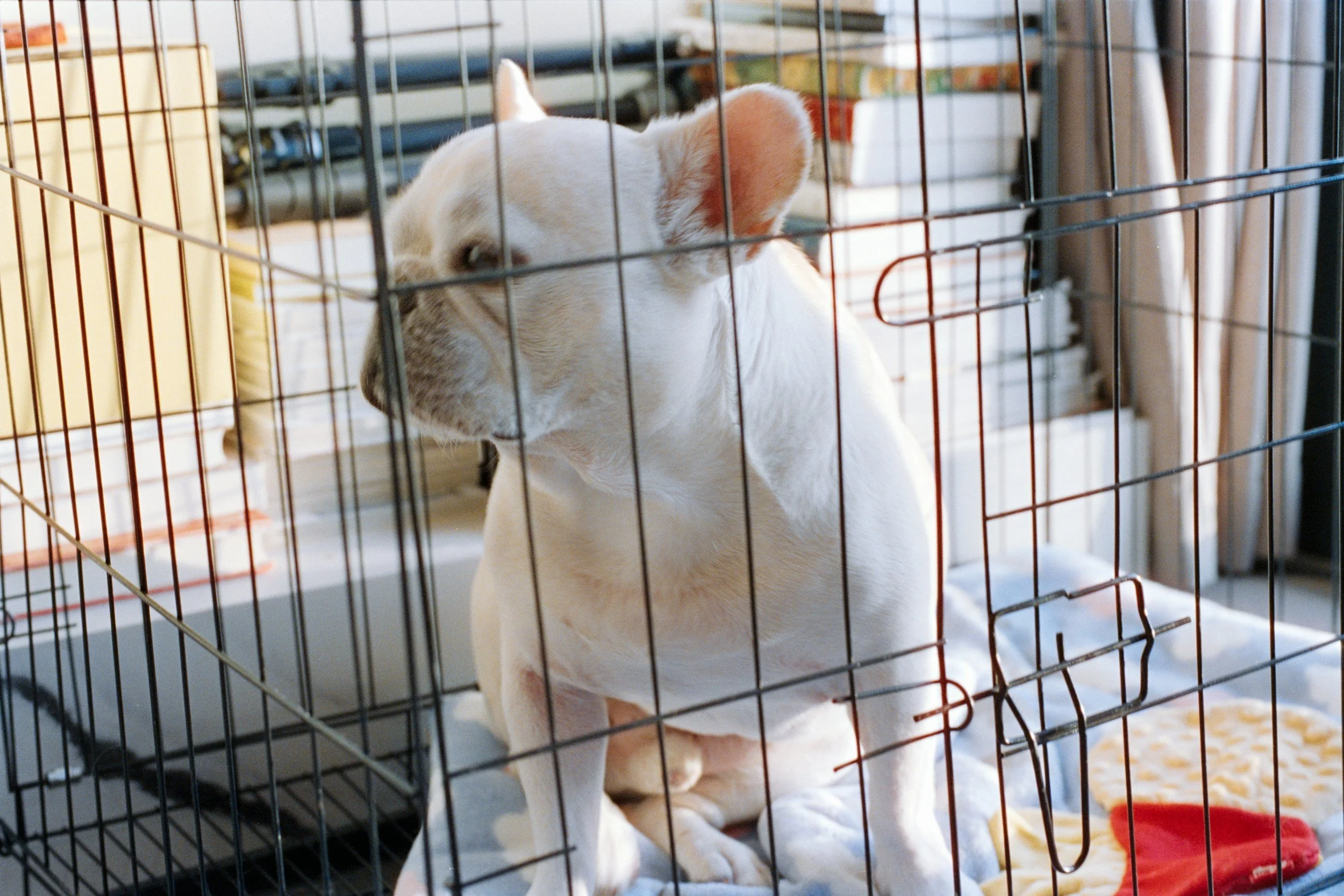
A Molded Plastic Puppy Playpen & Crate: Creates a management zone that prevents unsupervised wandering in your living space.
The Master Apartment Puppy Potty Training Schedule
Puppies generally hold their bladder for one hour per month of age, plus one hour. However, when active, playing, or drinking water, an 8-week-old puppy may need to eliminate every 20 to 30 minutes.
Follow these age-specific schedules to establish a predictable rhythm.
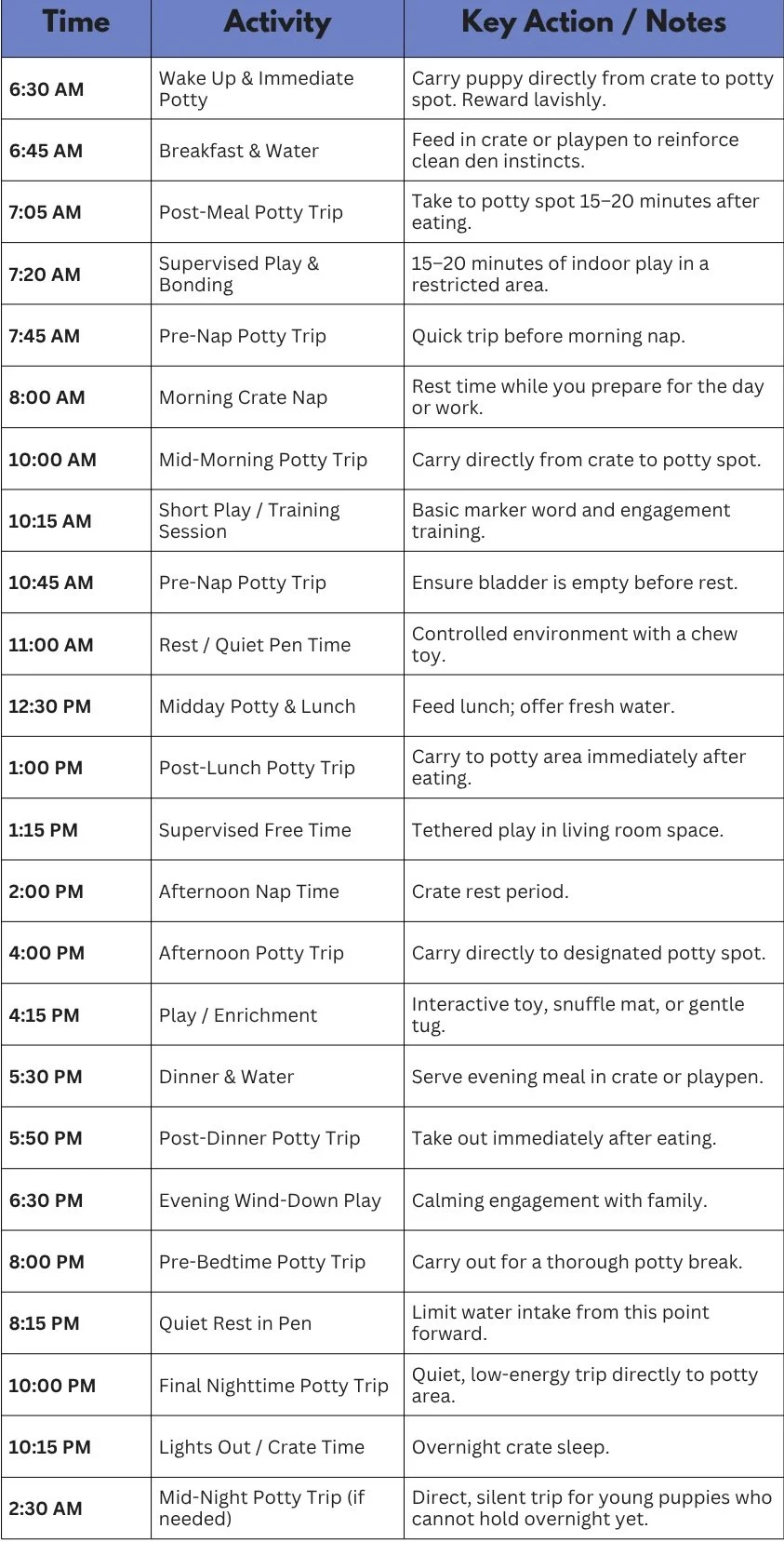
Schedule 1: The 8-to-12-Week-Old Puppy Routine
At this stage, your puppy’s bladder control is minimal. Proactive management is required to prevent accidents
Schedule 2: The 12-to-16-Week-Old Puppy Routine
By 12 weeks, bladder capacity improves, allowing longer intervals between breaks while maintaining a structured routine.
07:00 AM — Morning Potty Break -> Breakfast -> Post-Meal Potty
09:00 AM — Morning Nap (Crate or Secured Playpen)
11:30 AM — Midday Potty Break & Short Neighborhood Walk (if vaccinated)
12:30 PM — Lunch / Enrichment Toy -> Potty Break
01:30 PM — Afternoon Nap Period
04:30 PM — Afternoon Potty Break & Play Session
06:00 PM — Dinner -> Post-Dinner Potty Break
07:30 PM — Evening Neighborhood Leash Walk & Socialization
09:30 PM — Pre-Bedtime Potty Break
10:00 PM — Final Nighttime Potty Trip -> Crate for Overnight Sleep
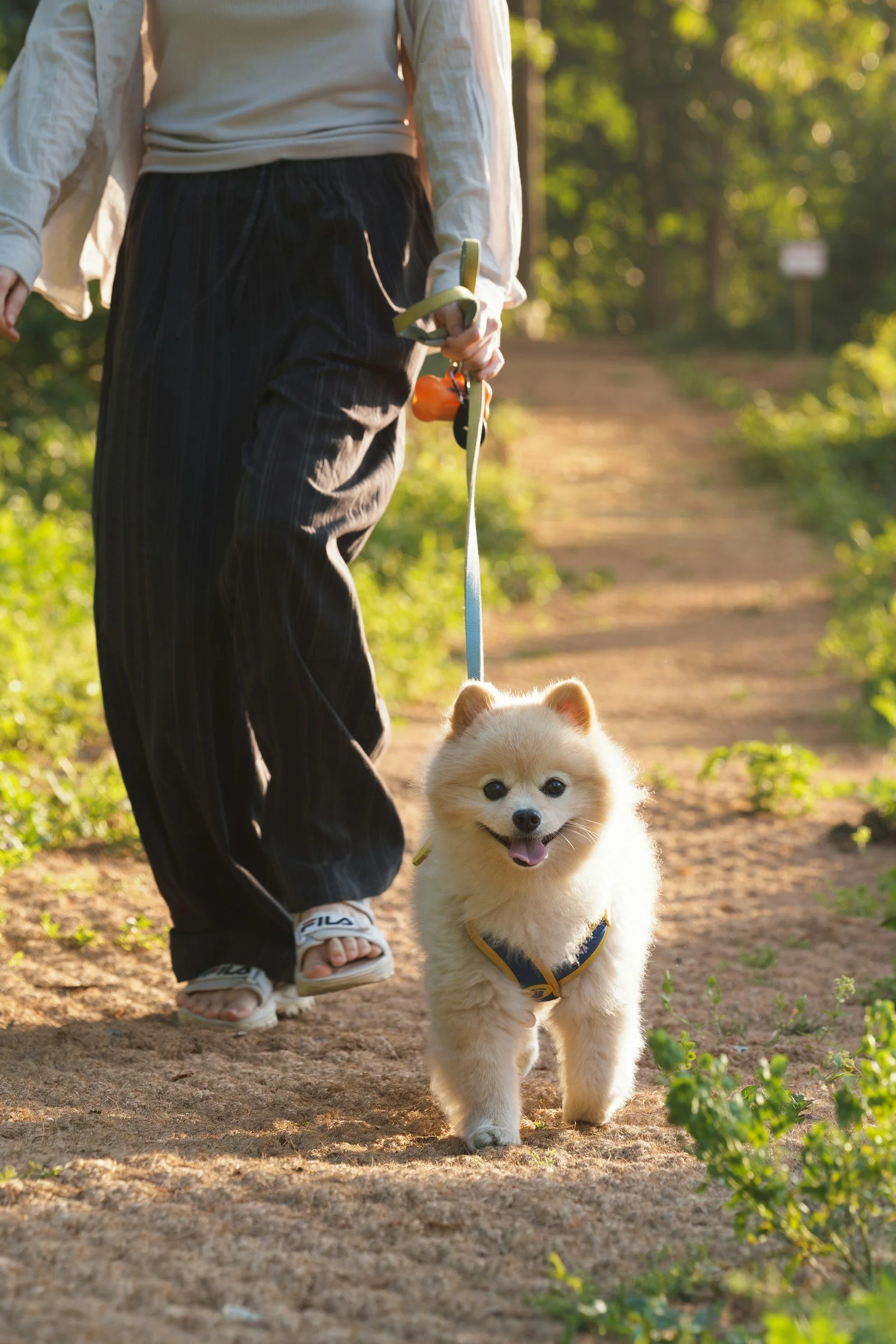
The Elevator & Hallway Protocol: Preventing Condo Carpet Accidents
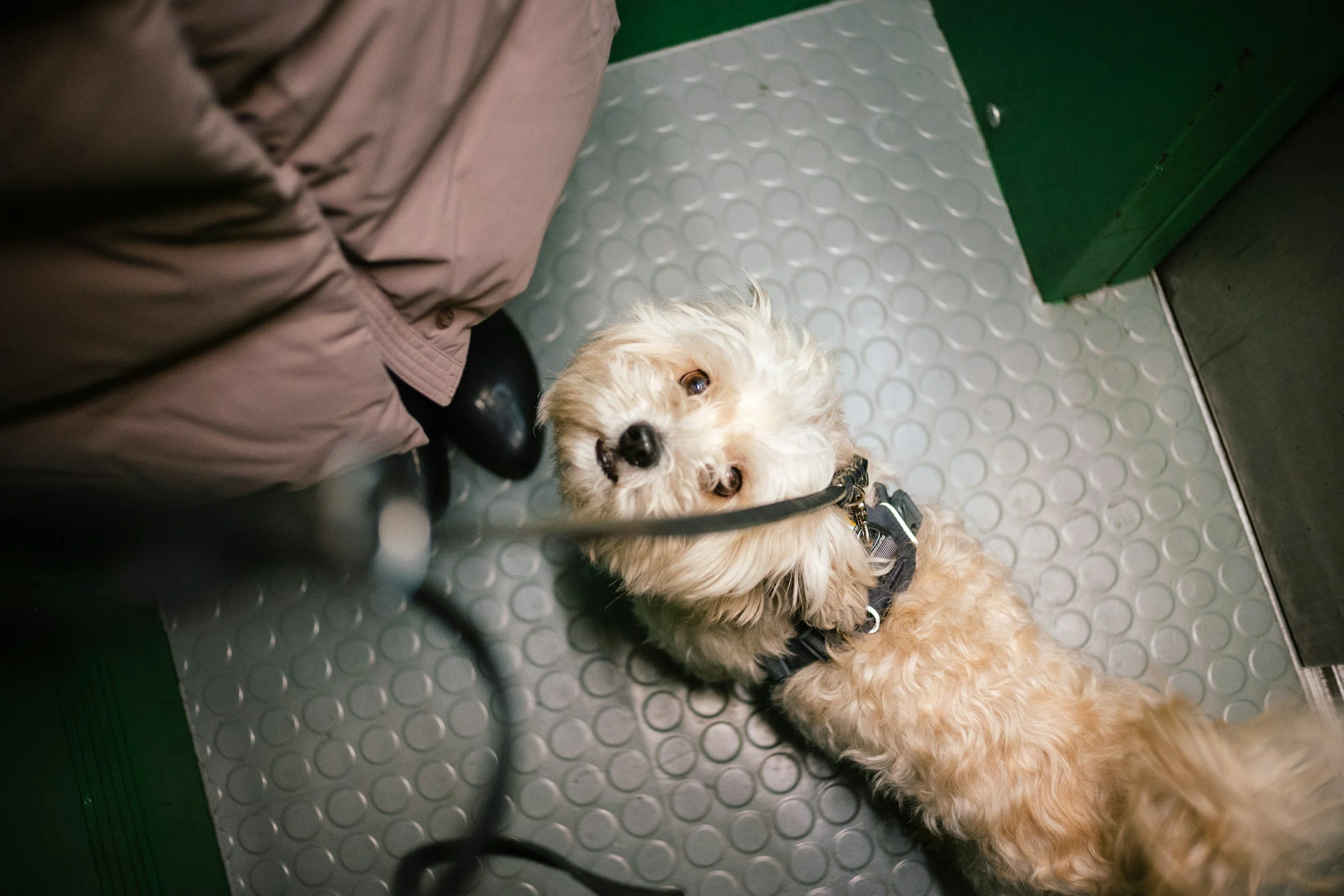
Corridors and elevators present frequent challenges for high-rise puppy owners. Smooth, carpeted hallways look like large indoor bathroom areas to a young dog, and movement can trigger the urge to eliminate.
Follow this step-by-step protocol to keep communal areas accident-free:
Step 1: The "Carry and Dash" Technique
Until your puppy reaches 14–16 weeks of age and develops full sphincter control, do not let them walk through apartment hallways or ride elevators on their own feet.
Lift your puppy directly out of their crate or playpen into your arms.
Carry them through the hallway, down the elevator, and through the lobby.
Set them down only once their paws are directly on the designated real-grass pad or outdoor grass area.
Why This Works: Puppies instinctually resist urinating while being held in your arms. Carrying them removes the physical trigger caused by walking on carpeted surfaces.
Step 2: Elevator Etiquette & Distraction
Once your puppy grows too heavy to carry comfortably, transition to walking on a leash using a reward-focused strategy:
Keep the Leash Short: Hold the leash short so your puppy stays right by your side.
Use High-Value Lures: Hold a small treat directly at your puppy’s nose level while walking through the hallway to keep their focus on moving forward rather than sniffing the carpet.
Command a "Sit" in the Elevator: Ask for a strict "Sit" or "Touch" behavior inside the elevator. A puppy who is focused on earning a reward is far less likely to squat and eliminate.
Navigating South Florida Weather: Heat, Rain, and Storms
Living in coastal cities like Deerfield Beach, Pompano Beach, and Fort Lauderdale requires adapting your puppy's potty routine to local weather conditions.
1. The 7-Second Asphalt Rule
During South Florida summers, ambient temperatures above 85°F can cause pavement, concrete walkways, and dark artificial turf to reach temperatures over 120°F.
The Test: Place the back of your bare hand flat against the pavement for 7 full seconds. If it feels uncomfortably hot for your hand, it is too hot for your puppy’s paws.
The Solution: Stick to shaded real-grass areas, use a balcony grass setup during peak heat hours (11:00 AM – 4:00 PM), or equip your puppy with protective dog boots early on.
2. Tropical Downpours and Thunderstorms
South Florida's summer afternoon storms can create sudden reluctance in young puppies to step outside onto wet surfaces.
Desensitization: Introduce your puppy to mild rain early using positive reinforcement. Pair rain exposure with high-value rewards like cooked chicken or cheese.
Covered Potty Areas: Identify covered parking garage perimeters, gazebo areas, or covered balcony spots ahead of time so severe weather doesn't disrupt your potty schedule.
Thunderstorm Comfort: If loud thunder frightens your puppy, maintain a calm, confident tone. Avoid overly frantic soothing, which can validate their fear, and immediately direct them to their indoor or covered grass patch with a high-value reward.
Crate Training & Noise Control in Shared Wall Environments
Living in a condo or apartment complex in Boca Raton or Lighthouse Point means sharing walls, ceilings, and floors with neighbors. Managing puppy vocalizations during crate training is critical to maintaining good community relations.
Building a Positive Crate Association
Never use the crate as a punishment. Make it a safe space by following these steps:
Feed All Meals in the Crate: Place food bowls at the back of the crate with the door open so your puppy associates the space with positive experiences.
Use Long-Lasting Chew Toys: Offer frozen, food-stuffed Kongs or lick mats inside the crate to encourage calm, self-soothing behaviors.
Implement the 15-Minute Rule: Ignore minor protest whining or demand barking for up to 15 minutes during nap times. Responding to every whine teaches your puppy that barking opens the crate door.
Neighbor Courtesy Protocol
If your puppy vocalizes during initial crate training, leave a polite note for immediate neighbors:
"Hi neighbors! We just welcomed a new puppy to unit 4B. We are actively working on crate and house training. Thank you for your patience while our pup adjusts to their new home!"
Proactive communication builds goodwill with neighbors and buys you grace during the initial training phase.
Troubleshooting Common High-Rise Potty Blunders
Issue 1: "My puppy goes as soon as we get back inside!"
Cause: Your puppy was too distracted by the sights and sounds of the outdoors (traffic noise, passing dogs, coastal winds) to eliminate.
Fix: When taking your puppy to their potty spot, stand still in one place for 3–5 minutes. Give them a 4-foot leash radius and avoid talking or playing. If they do not eliminate within 5 minutes, carry them back inside, place them in their crate or playpen for 10–15 minutes, and try again. Repeat until successful, then reward immediately.
Issue 2: "My puppy thinks the balcony grass pad is a toy!"
Cause: Natural instincts lead puppies to dig, chew, or shred grassy textures.
Fix: Always keep your puppy on a short leash when taking them to the balcony potty pad. Stand calm and neutral. If they attempt to chew or dig the grass, gently redirect them using the leash and reward them immediately when all four paws are on the grass and they sniff the surface.
Issue 3: "My puppy is having regression accidents on apartment rugs."
Cause: Rugs offer an absorbent texture similar to grass pads or pee pads, confusing a young puppy.
Fix: Roll up non-essential area rugs and accent mats during the initial 4–6 weeks of housebreaking. Limit your puppy's access to carpeted bedrooms using baby gates or playpens until they demonstrate 3 consecutive weeks without accidents.
When to Seek Professional In-Home Dog Training
Housebreaking a puppy in an apartment environment requires patience, consistency, and a clear plan. However, persistent challenges—such as severe crate anxiety, persistent hallway accidents, fear of elevators, or weather-induced resistance—can stall progress.
Partnering with a professional, certified in-home puppy trainer provides customized guidance tailored specifically to your building's layout, your lifestyle, and your puppy's temperament.
Premier In-Home Puppy Training Across Broward & Palm Beach Counties
If you need hands-on assistance housebreaking your puppy, our dedicated team offers specialized in-home puppy training programs tailored for apartment, condo, and high-rise living across South Florida, including:
Boca Raton: Custom high-rise protocols, balcony setup optimizations, and lobby manners training.
Fort Lauderdale: Urban outdoor walking strategies, elevator desensitization, and crate noise management.
Delray Beach: Leash manners, public space etiquette, and structured daily scheduling.
Deerfield Beach & Pompano Beach: Weather-proofing potty routines, grass pad transitions, and playpen setups.
Lighthouse Point: Complete personalized housebreaking and foundational obedience coaching.
Don't let apartment potty training stress consume your joy of raising a new puppy. Contact us today to schedule your comprehensive in-home puppy consultation and establish a clear path toward a fully housebroken, confident companion!