

Living with a dog that growls, lunges, snaps, or bites transforms your home into a high-stress environment. Every walk becomes a nerve-wracking exercise in avoidance, every doorbell ring causes panic, and welcoming guests into your home feels impossible. If you are constantly scanning the horizon for other pets or worrying about your dog's next unpredictable reaction, you are not alone. Thousands of pet owners across South Florida wrestle with these exact challenges daily.
When searching for reliable guidance on training an aggressive dog, owners are often flooded with conflicting, dangerous, or outdated advice. Some sources recommend harsh dominance methods that escalate danger, while others suggest ignoring the problem in hopes it will resolve itself. Aggression in dogs rarely disappears on its own; without structured, behaviorally sound management, it almost always worsens over time.
Aggression is not a character flaw or a sign that your dog is "bad." It is a complex form of communication driven by underlying emotional states like fear, anxiety, frustration, or pain. Understanding the root causes of canine aggression, implementing vet-approved safety protocols, knowing when to call in certified experts, and choosing the right behavioral programs—such as those offered by Canine Intuition across Broward and Palm Beach Counties—are essential steps to restore peace to your household.
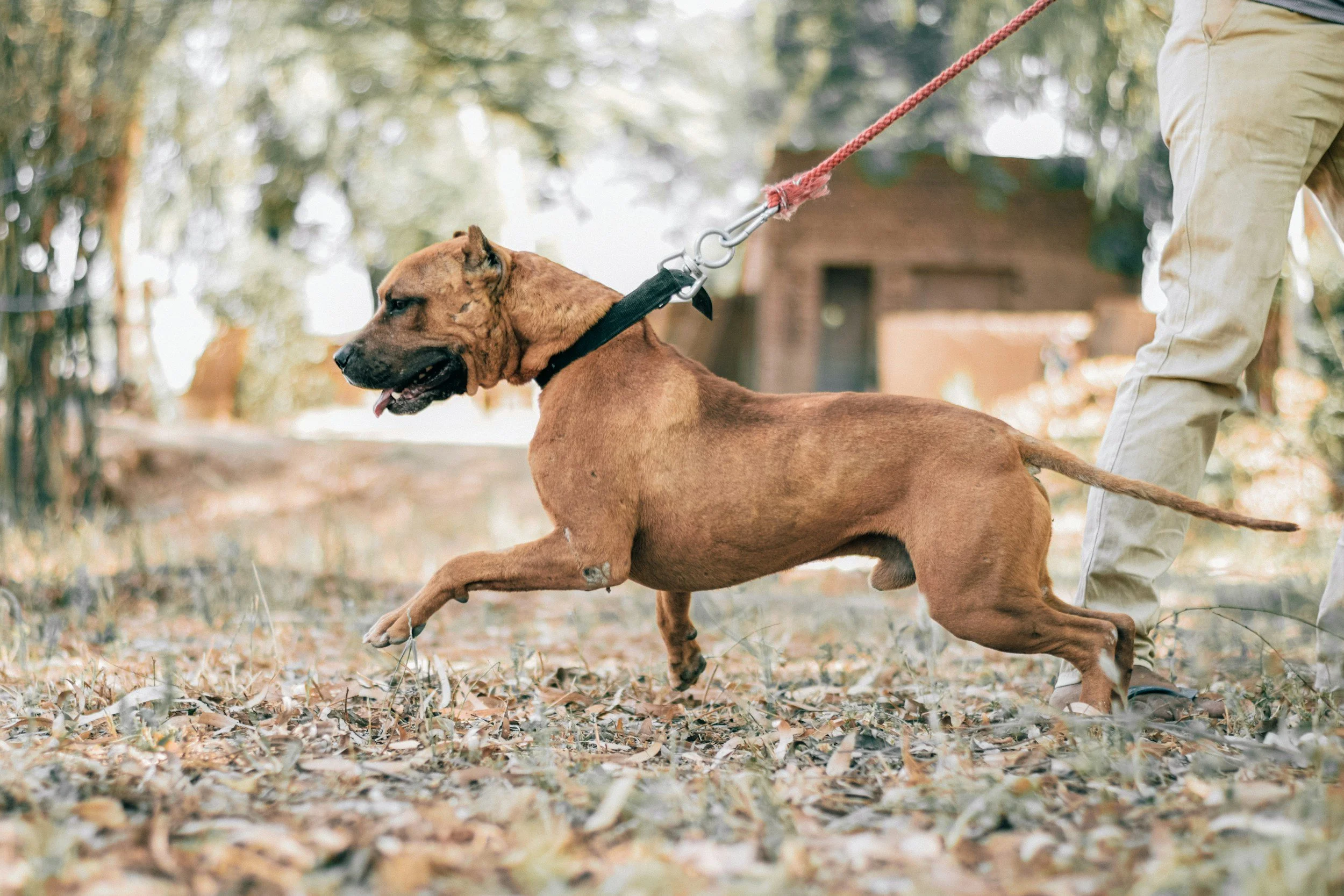
Deconstructing Dog Aggression: Root Causes and Behavioral Types
Before attempting any behavioral intervention, you must understand why your dog is reacting aggressively. Dogs do not display aggressive behaviors without a trigger. Aggression is a coping mechanism designed to create distance between the dog and a perceived threat, resource challenge, or uncomfortable situation.
Medical and Pain-Induced Aggression
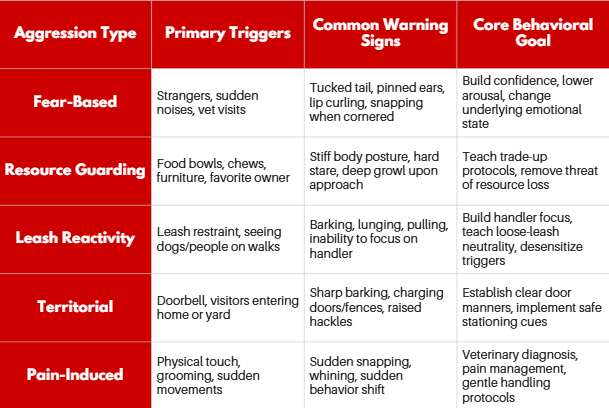
An unexpected onset of aggressive behavior in a previously calm dog often stems from underlying medical conditions. Chronic orthopedic pain (such as hip dysplasia or arthritis), ear infections, dental disease, neurological disorders, or endocrine imbalances like hypothyroidism can drastically lower a dog's tolerance threshold. When a dog is in physical pain, routine handling or unexpected contact can trigger a defensive bite.
Fear and Anxiety-Based Aggression
Fear is the single most common driver of canine aggression. A fearful dog typically attempts to retreat or signal discomfort through subtle body language (yawning, lip licking, head aversion, or freezing). If those subtle signals are ignored or misread, the dog learns that lunging, growling, or snapping successfully forces the threat to back away. Over time, fear shifts from a defensive retreat to an offensive display.
Resource Guarding
Resource guarding occurs when a dog perceives a threat to something it values highly—such as food, toys, sleeping spots, or even specific human family members. The dog uses stiff body language, hard stares, growling, or biting to prevent humans or other animals from approaching or taking the coveted item.
Leash Reactivity and Barrier Frustration
Many owners looking into training a aggressive dog are actually dealing with barrier frustration or leash reactivity. When restricted by a leash, fence, or window, a dog cannot execute its natural "flight" instinct. The resulting restraint causes intense arousal and frustration, which explodes into lunging, barking, and snapping when the dog sees another dog or person passing by.
Territorial and Protective Aggression
Territorial aggression occurs when a dog defends its perceived territory—such as your house, yard, or car—from visitors, delivery drivers, or passersby. Protective aggression occurs when the dog feels compelled to guard specific family members from real or imagined threats.
Redirected Aggression
Redirected aggression occurs when a dog is intensely aroused or frustrated by a target it cannot reach (such as a neighbor's dog on the other side of a fence) and bites a nearby handler, family member, or second household pet who attempts to intervene.
Identifying Canine Aggression Types
Veterinarian-Approved Safe At-Home Steps for Managing Aggressive Behavior
While severe aggression requires hands-on evaluation by a certified behavioral specialist, owners can implement several critical safety and management steps immediately at home. Management does not fix aggression on its own, but it prevents the behavior from escalating and keeps everyone safe while a long-term plan is developed.
Step 1: Complete a Veterinary Health Screening
Before modifying any behavior, schedule a comprehensive physical exam with your veterinarian. Request blood work (including a full thyroid panel) and an orthopedic assessment. If your dog is acting out due to hidden joint pain or a thyroid imbalance, behavioral modification will not work until the medical condition is properly managed.
Step 2: Enforce Strict Environmental Management
Management means structuring your dog's environment so they cannot practice the aggressive behavior or place anyone in danger.
Secure Barriers: Use heavy-duty baby gates, crate systems, or double-door entry protocols to prevent your dog from bolting out the front door or cornering visitors.
Remove Guarded Items: If your dog guards high-value chews, toys, or food, remove those items completely from common areas. Feed your dog in a closed room or crate where they feel entirely unthreatened.
Visual Barriers: Block window views using frosted window film or closed blinds if your dog barks or lunges at people passing by your house.
Step 3: Positive Basket Muzzle Conditioning
A comfortable, well-fitted basket muzzle is one of the most effective safety tools for managing aggressive dogs. Basket muzzles allow your dog to pant, drink water, and take treats while preventing bites.
Never use a muzzle as punishment.
Introduce the muzzle slowly by placing high-value treats (like peanut butter or real meat) inside the basket, allowing your dog to voluntarily place their snout inside.
Gradually build up the duration until your dog comfortably wears the muzzle during walks, vet visits, and training sessions.
Step 4: Implement Desensitization and Counter-Conditioning
Desensitization involves exposing your dog to a trigger at a distance low enough that they remain calm (below threshold). Counter-conditioning pairs the distant trigger with something exceptionally high-value (like fresh chicken or cheese) to change the dog's emotional response from fear/anger to positive anticipation.
Key Rule for Trigger Distance: If your dog is barking, growling, lunging, or ignoring high-value treats, you are too close to the trigger. Immediately increase distance until your dog can look at the trigger and turn back to focus on you calmly.
Step 5: Establish Predictable Structure and Daily Routine
Aggressive and anxious dogs thrive on predictability. Implement clear, calm structure into your dog's daily life:
Practice impulse-control exercises like waiting at doors, sitting before meals, and holding a "place" command on a bed.
Ensure your dog receives adequate physical exercise and mental stimulation (such as snuffle mats, puzzle feeders, and nose work) in safe environments.
Keep your own body language relaxed; dogs pick up on handler tension through the leash.
What NOT to Do: The Danger of Aversive Dominance Methods
When researching training an aggressive dog, you may encounter outdated advice advocating alpha rolls, physical corrections, prong collar pops, or yelling. Avoid these confrontational techniques at all costs. Applying physical force or pain to an already fearful or defensive dog validates their perception that the environment is dangerous, suppresses early warning signs (like growling), and dramatically increases the likelihood of a severe bite.
Red Flags: When At-Home Steps Are Not Enough
While environmental management and basic counter-conditioning are helpful, aggression can quickly outpace an owner's ability to handle it safely at home. Recognizing key warning signs helps you intervene before a traumatic injury occurs.
Urgent Warning Signs Requiring Professional Help:
Bites That Break Skin: Any bite that leaves punctures, tearing, or severe bruising indicates poor bite inhibition and a high risk of future injury.
Escalation of Triggers: If your dog's reactions are expanding—for example, moving from barking at foreign dogs to growling at familiar household members—the aggression is compounding.
Targeting Children or Vulnerable Family Members: Aggression directed toward infants, young children, elderly family members, or physically compromised individuals requires immediate professional intervention.
Lack of Warning Signals: A dog that lunges or bites without prior warning signals (such as growling, stiffening, or lip curling) is extremely dangerous and requires expert behavioral evaluation.
Severe Resource Guarding of Basic Needs: If your dog aggressively guards furniture, entryways, or normal walking paths, everyday movement in your house becomes unsafe.
Inability to Calm Down (High Arousal): If your dog takes tens of minutes or hours to come down from an aggressive outburst, their nervous system is chronically overloaded.
Local Success Stories: How Canine Intuition Restored Peace in Broward & Palm Beach Counties
Aggression management is not theoretical—it requires real-world application in everyday South Florida environments. The team at Canine Intuition has spent over two decades helping dog owners across Broward and Palm Beach Counties transform dangerous, reactive dogs into safe, reliable companions.
Case Study 1: "Max" – The 90 lb German Shepherd in Boca Raton (Palm Beach County)
The Challenge: Max, a 90 lb German Shepherd living in Boca Raton, developed severe leash reactivity and dog-on-dog aggression. Walks through his neighborhood had become impossible; Max would lung, snap, and pull his owner off her feet whenever another dog walked past. The owner was terrified Max would break his collar and injure another pet.
The Solution: Max was enrolled in Canine Intuition's 3-Week Board & Train Program. The certified behavioral team immersed Max in a structured environment where he learned off-leash control, distance command responses, and neutral social behaviors around heavy distractions.
The Result: After completing the program and follow-up owner coaching sessions, Max's owner gained complete control over her dog. Today, Max walks calmly on a loose leash through busy Boca Raton parks and rests peacefully when passing other dogs on trails.
Case Study 2: "Luna" – Fear Aggression & Resource Guarding in Fort Lauderdale (Broward County)
The Challenge: Luna, a rescue pit bull mix adopted by a family in Fort Lauderdale, exhibited severe resource guarding over her dog bed and food bowl, culminating in an incident where she growled and snapped at a family member walking through the hallway.
The Solution: The family booked an initial Behavioral Assessment with Canine Intuition and entered the Intensive Behavior Modification Program (IBMP). The program restructured Luna's home routine, implemented clear handling protocols, and systematic counter-conditioning to remove the anxiety behind her guarding.
The Result: Luna learned that humans approaching her space meant good things, not loss. Her owners gained confidence, learned how to read her body language, and eliminated the tension that had gripped their home for months.
Professional Solutions: How Canine Intuition Resolves Severe Dog Aggression
When searching for effective options for training an aggressive dog, a cookie-cutter basic obedience class will not cut it. Group classes in public settings can overwhelm an aggressive dog and put other participants at risk. Real behavior modification requires customized, expert-led intervention.
Canine Intuition sets the benchmark for behavioral excellence in South Florida, offering specialized aggression management programs for dogs across Fort Lauderdale, Boca Raton, Delray Beach, West Palm Beach, Coral Springs, and surrounding communities.
Comprehensive Initial Behavioral Assessment
Every journey with Canine Intuition begins with an in-depth behavioral evaluation. A certified behavior modification specialist observes your dog in a controlled setting, identifies specific stress points and triggers, assesses bite history and reactivity thresholds, and evaluates family dynamics to build a custom rehabilitation plan.
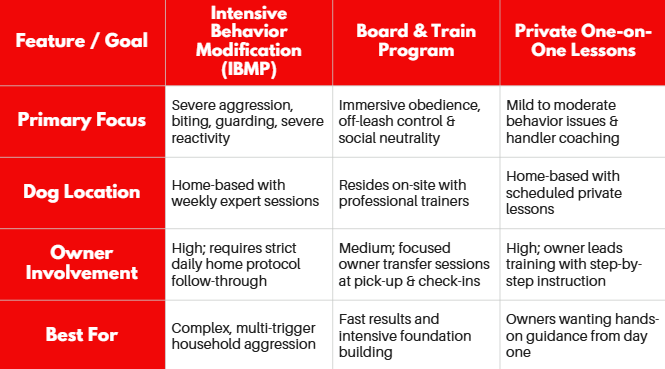
Intensive Behavior Modification Program (IBMP)
Designed specifically for severe behavioral issues—including leash reactivity, dog aggression, human aggression, territorial guarding, and severe resource guarding—the IBMP provides an overhaul of your dog's mindset and your handling protocols. The program emphasizes structured weekly sessions, clear communication, and consistent daily protocols that rebuild trust and responsiveness.
Immersive Board & Train Programs
For fast, deep-seated behavioral breakthroughs, Canine Intuition offers specialized Board & Train options. Your dog stays in a structured, professional training environment where certified trainers work with them multiple times daily around controlled distractions.
Two-Week On-Leash Program: Focuses on core obedience commands, loose-leash walking, crate and door manners, and impulse control around urban distractions.
Three-Week On/Off-Leash Program: Expands on basic control, adding distance commands, reliable off-leash recall, and advanced distraction proofing in public places.
Custom Aggression Rehabilitation Immersion: A tailored multi-week program designed for high-liability cases requiring intensive, round-the-clock behavior modification.
One-on-One Private Lessons
For mild to moderate behavioral challenges, Canine Intuition offers private individual instruction. A certified trainer works directly with you and your dog in your home or local environment, teaching you how to handle reactions, enforce structure, and master handling techniques step-by-step.
Comparing Canine Intuition Program Options
Taking Back Control: Your Step-by-Step Action Plan

Overcoming dog aggression is not about breaking your dog's spirit; it is about providing clear communication, emotional stability, and strong leadership. If you are struggling with training an aggressive dog in South Florida, follow this practical action plan to take back control of your home:
Prioritize Immediate Safety: Implement crate safety, visual barrier management, and begin basket muzzle conditioning today.
Book a Vet Exam: Rule out physical pain, thyroid issues, or underlying health conditions with your veterinarian.
Stop Punitive Measures: Eliminate physical corrections, prong snaps, or alpha rolls that increase fear and bite risks.
Schedule a Professional Behavioral Assessment: Do not wait for a bite incident to occur before taking action. Reach out to certified aggression specialists who understand complex behavioral rehabilitation.
Book Your Behavioral Assessment with Canine Intuition Today
You do not have to live in fear or surrender your dog to a shelter. Peace, safety, and enjoyable walks are within reach for you and your pet.
Canine Intuition serves dog owners across all of Broward County and Palm Beach County with proven, certified aggression management services, custom Board & Train programs, and tailored private lessons.
Take the first step toward a calm, safe household today:
📞 Call Direct: (336) 442-1234
🌐 Schedule Online: Visit Canine Intuition to request your Initial Behavioral Assessment.
📍 Service Area: Fort Lauderdale, Boca Raton, Delray Beach, West Palm Beach, Coral Springs, Miramar, Pembroke Pines, and surrounding South Florida communities.
Don't wait until a reactive moment turns into a emergency. Contact Canine Intuition now to reserve your behavioral assessment and start your dog's transformation!